

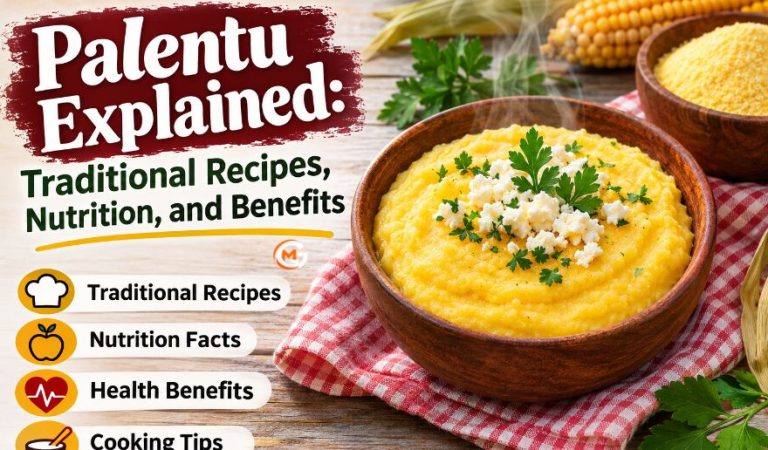
Palentu is a traditional cornmeal dish known for its simple ingredients, comforting texture, and mild flavor. Closely related to polenta, it has long been part of everyday meals in Balkan and Italian food traditions. People enjoy it creamy, thick, or firm enough to slice, making it suitable for different recipes and serving styles.
One reason Palentu remains popular is its flexibility. It can be prepared with water and salt or enriched with milk, butter, cheese, and vegetables. Its affordable ingredients and straightforward cooking method make it a practical choice for home kitchens.
Beyond its familiar taste, Palentu provides carbohydrates, some essential nutrients, and several ways to create balanced meals. Understanding its origins, nutritional value, cooking methods, and limitations can help you prepare it with confidence.
Palentu at a Glance
| Detail | Information |
|---|---|
| Common Name | Palenta or polenta |
| Word Form | Palentu |
| Food Category | Cooked cornmeal dish |
| Main Ingredient | Ground dried corn |
| Traditional Regions | Balkans and Italy |
| Related Names | Pura, kačamak, polenta |
| Typical Color | Yellow or pale white |
| Taste | Mild, slightly sweet corn flavor |
| Texture | Creamy, thick, or firm |
| Basic Ingredients | Cornmeal, water, salt |
| Cooking Time | 5–45 minutes, depending on type |
| Cooking Method | Simmering and stirring |
| Common Pairings | Cheese, yogurt, vegetables |
| Dietary Features | Naturally gluten-free ingredients |
| Serving Options | Breakfast, lunch, or dinner |
What Is Palentu? Meaning and Traditional Origins
Palentu is a grammatical form of palenta, a word used in Croatian, Bosnian, and Serbian for a dish made by cooking cornmeal in liquid. More specifically, palentu is the accusative singular form of palenta. It does not describe a separate food. The internationally familiar name is polenta, which comes from Italian culinary tradition.
Cornmeal dishes became important throughout parts of Europe because dried corn was accessible, affordable, and easy to store. Families prepared thick corn porridge as a filling meal, often serving it with dairy products, vegetables, or meat. Regional names and recipes developed over time, reflecting local ingredients and cooking habits.
What Is Palentu Made Of?
Traditional Palentu requires only a few ingredients. Cornmeal provides the main flavor and body, while water creates the soft consistency. Salt improves the taste. Some households replace part of the water with milk or broth for a richer result.
The type of cornmeal matters. Fine cornmeal creates a smoother dish, while coarse cornmeal produces a more noticeable grainy texture. Yellow cornmeal is common, although white varieties are also used. Butter, cheese, olive oil, and yogurt are popular additions, but they are not required for the basic preparation.
How to Make Traditional Palentu at Home
Preparing Palentu is straightforward, although traditional cornmeal needs enough cooking time to become tender. For a creamy result, a useful starting ratio is one cup of dry cornmeal to four cups of water. Some varieties need additional liquid, so the package instructions should guide adjustments.
Ingredients for a Simple Palentu Recipe
For approximately four servings, prepare these ingredients:
-
1 cup medium-ground cornmeal
-
4 cups water or vegetable broth
-
½ teaspoon salt, adjusted to taste
-
1 tablespoon butter or olive oil, optional
-
¼ cup grated cheese, optional
Step-by-Step Cooking Instructions
Bring the water to a gentle boil in a heavy-bottomed saucepan and add salt. Slowly pour in the cornmeal while whisking continuously. This prevents dry pockets from forming. Reduce the heat to low once the mixture begins thickening.
Cook for approximately 30–45 minutes, stirring regularly, until the grains become tender. Add warm water if the mixture thickens before it finishes cooking. Stir in butter or cheese after cooking, then serve immediately for the softest texture. Quick-cooking products may require only 5–10 minutes, depending on their instructions.
Traditional Palentu Recipes and Popular Variations
Different regions serve cornmeal dishes in distinctive ways. In Balkan households, palenta may accompany yogurt, sour cream, fresh cheese, or cooked vegetables. These additions create a satisfying meal without requiring complicated preparation.
Creamy Palentu With Cheese
Prepare the basic recipe using water or a mixture of water and milk. Once cooked, stir in grated cheese and a little butter. The finished dish should remain soft enough to spoon into bowls. Serve with sautéed mushrooms or spinach for additional flavor and nutrients.
Firm, Grilled, or Fried Polenta
For a firmer variation, spread cooked polenta in a shallow dish and refrigerate until set. Cut it into squares or slices, then grill, bake, or pan-fry until golden. Serve with tomato sauce, roasted vegetables, or herbs. This approach is especially useful for turning leftovers into another meal.
Palentu Nutrition: Calories, Carbohydrates, and Nutrients
Palentu is primarily a carbohydrate-rich food because cornmeal contains starch. Cooking it with water increases its weight and volume without adding calories. As a result, dry cornmeal and cooked polenta have very different nutritional values per 100 grams.
Plain cooked polenta typically provides around 70–110 calories per 100 grams, depending on the amount of water absorbed. It contains modest amounts of protein and fiber, with relatively little fat. Whole-grain cornmeal may retain more fiber and nutrients than refined versions. Enriched cornmeal can also provide added iron and B vitamins.
Nutrition changes when recipes include cheese, butter, cream, or oil. These ingredients may improve taste and provide additional nutrients, but they also increase calories and fat. Checking the cornmeal label and considering the complete recipe gives a more accurate understanding of each serving.
Mast Read: Novafork Explained: Uses, Safety, and What to Know
Potential Health Benefits of Eating Palentu
Palentu can contribute to a balanced eating pattern when combined with varied, nutritious ingredients. Its greatest advantage is providing a flexible carbohydrate source that can be prepared without excessive fat or added sugar.
Provides Energy for Daily Activities
Cornmeal contains carbohydrates that the body breaks down into glucose for energy. This makes Palentu a useful addition to meals, particularly when paired with protein-rich foods and vegetables. It is not a special energy booster, but it can serve the same dietary purpose as rice, bread, or other grains.
Naturally Gluten-Free Ingredients
Corn does not naturally contain gluten, making plain cornmeal suitable for many gluten-free diets. However, people with celiac disease should choose products labeled gluten-free because processing and packaging can introduce cross-contact. Broths, toppings, and other ingredients also need checking.
Nutritional Limitations and Things to Consider
Although Palentu has nutritional value, it should not be treated as a complete meal by itself. Plain cornmeal is relatively low in protein and may provide limited fiber, especially when refined. Adding beans, eggs, fish, yogurt, or vegetables can improve the meal’s overall balance.
Portion size also matters. Large servings contribute substantial carbohydrates, while generous amounts of butter, cheese, and salty toppings can change the nutritional profile considerably. People managing blood glucose may benefit from moderate portions combined with protein, fiber, and healthy fats.
Common Palentu Cooking Problems and Easy Solutions
Even experienced cooks sometimes encounter texture problems. Most issues come from adding cornmeal too quickly, using insufficient liquid, or cooking at excessive heat.
Why Does Palentu Become Lumpy?
Lumps often form when dry cornmeal enters hot liquid all at once. Prevent them by pouring gradually while whisking. If small lumps develop, whisk firmly before the mixture becomes too thick.
How to Fix Thick or Grainy Palentu
If the mixture becomes too thick, add warm water gradually and stir until smooth. A grainy result may indicate that the cornmeal needs more cooking time. Keep the heat low and continue cooking until tender.
Preventing Sticking and Burning
Use a heavy saucepan, maintain gentle heat, and scrape the bottom regularly with a wooden spoon. Thick polenta can bubble and splash, so take care when stirring.
How to Serve Palentu With Everyday Meals
Palentu works well as either a main dish or a side. Its mild flavor makes it particularly suitable for foods with sauces, herbs, or strong seasonings. Creamy versions can replace mashed potatoes, while firm slices offer another option alongside grilled vegetables.
For breakfast, serve it warm with yogurt or fresh cheese. At lunch, combine it with mushrooms and leafy greens. For dinner, pair it with lentils, beans, roasted vegetables, or a protein of your choice. These combinations make the dish more varied and satisfying.
How to Store and Reheat Leftover Palentu
Cool leftovers promptly in shallow containers and refrigerate within two hours. Store them covered at 40°F (4°C) or below and use within three to four days. Discard food left at room temperature beyond safe storage limits.
To reheat creamy Palentu, add a little water or milk and warm it gently while stirring. Firm leftovers can be sliced and baked or pan-fried. Reheat thoroughly to 165°F (74°C), especially when serving previously refrigerated portions.
Palentu vs. Polenta, Grits, and Mămăligă
Palenta and polenta refer to closely related cornmeal preparations, although their names and customary accompaniments reflect different regional traditions. Palentu is simply a grammatical form of palenta, rather than a separate recipe.
American grits are another ground-corn dish, often made with different corn varieties and processing methods. Romanian mămăligă is also traditionally prepared from cornmeal. These foods share basic ingredients but can differ in grind, texture, consistency, cooking techniques, and serving customs.
Final Thoughts
Palentu represents a simple yet adaptable part of traditional cornmeal cooking. Its affordable ingredients, gentle flavor, and flexible texture make it suitable for many everyday meals.
The dish provides carbohydrates and can contribute useful nutrients, but its health value depends on ingredients, portions, and food pairings. Starting with plain cornmeal, water, and salt is an easy way to learn the method before exploring regional variations and richer recipes.
FAQs
1. What does Palentu mean?
Palentu is the accusative singular form of the word palenta in Croatian, Bosnian, and Serbian. Palenta refers to a cooked cornmeal dish commonly associated with polenta. The spelling reflects grammar rather than a distinct type of food.
2. Is Palentu the same as polenta?
Yes, Palentu refers to the same general type of cornmeal dish known as polenta. Regional recipes may differ in consistency, ingredients, and toppings, but the core preparation involves cooking ground corn in liquid.
3. What ingredients are needed to make Palentu?
The simplest recipe uses cornmeal, water, and salt. Many cooks add butter, milk, cheese, or broth for extra flavor. Medium-ground cornmeal is a practical choice for beginners because it provides a pleasant balance of texture and tenderness.
4. How long does Palentu take to cook?
Traditional cornmeal usually takes approximately 30–45 minutes to become tender, although cooking time varies with the grind. Instant or quick-cooking polenta often takes just 5–10 minutes. Always follow the package instructions when available.
5. Is Palentu healthy to eat every day?
Palentu can be eaten regularly as part of a varied diet. It provides carbohydrates and some nutrients, but lacks enough protein and vegetables to make a balanced meal alone. Portion size and added ingredients are important considerations.
6. Is Palentu naturally gluten-free?
Plain Palentu made from uncontaminated cornmeal, water, and salt is naturally gluten-free. However, manufacturing cross-contact can occur. Anyone with celiac disease should select certified or clearly labeled gluten-free cornmeal and check all additional ingredients.
7. Can you make Palentu without milk or butter?
Yes. Traditional Palentu can be made entirely with water, cornmeal, and salt. Olive oil, herbs, or vegetable broth can add flavor without dairy. This makes it easy to prepare a plant-based version.
8. Can cooked Palentu be stored and reheated?
Yes. Refrigerate cooked Palentu promptly in a covered container and consume it within three to four days. Reheat creamy portions with extra liquid, or slice firm leftovers for baking or pan-frying. Always reheat thoroughly before serving.
For More News and Daily Updates Visit: Gigly Magazine
