

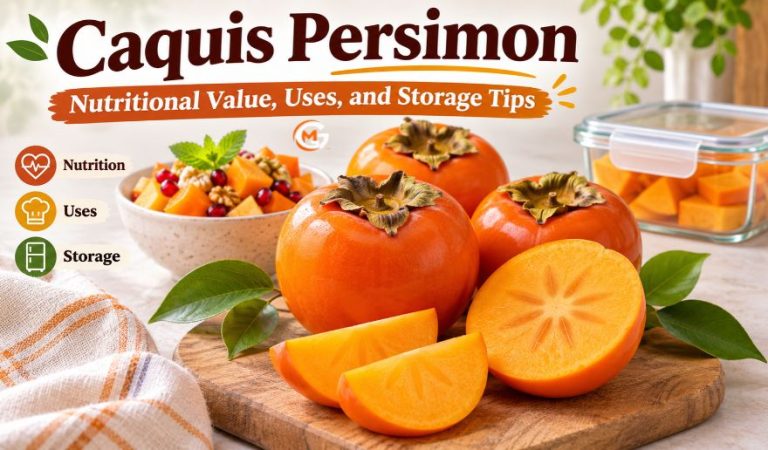
Caquis Persimon are bright orange persimmons prized for their sweet flavor and pleasantly crisp bite. Unlike many traditional persimmons, they can be enjoyed while firm, making them easy to slice, pack for lunch, or serve with a meal. Their apple-like convenience has helped introduce this Spanish fruit to shoppers beyond its growing region.
They also offer fiber, naturally occurring plant compounds, and useful vitamins and minerals. However, the name can be confusing: Persimon is a certified trademark, not a separate species of fruit.
This guide explains what makes these persimmons different, what their nutrition numbers mean, how to prepare them, and how to keep them fresh at home.
Quick info: Caquis Persimon
| Detail | Information |
|---|---|
| Common name | Caquis Persimon |
| Fruit type | Asian persimmon |
| Botanical species | Diospyros kaki |
| Main variety | Rojo Brillante |
| Commercial name | Persimon® |
| Growing region | Valencia, Spain |
| Certification | PDO Ribera del Xúquer |
| Skin color | Orange |
| Flesh texture | Firm and crisp |
| Flavor | Sweet and mild |
| Eating stage | Ready while firm |
| Main season | October–January |
| Common uses | Snacks, salads, desserts |
| Whole-fruit storage | Room temperature |
What Are Caquis Persimon?
The Spanish word caquis means persimmons. Caquis Persimon generally refers to the Rojo Brillante persimmons marketed under the Persimon® name. This variety originated in the Valencia region of Spain and produces large, somewhat elongated fruit. The protected name belongs to certified fruit from the Ribera del Xúquer growing area. A genuine branded fruit should carry the Persimon identification and protected-origin information. It is important to separate the variety from the trademark: not every firm persimmon sold worldwide is a Persimon. Other types can look similar but have different growing regions, textures, and handling needs.
Why Can Persimon Fruit Be Eaten While Firm?
Rojo Brillante persimmons naturally contain soluble tannins that can make the mouth feel unusually dry and puckered. Traditionally, growers waited until the fruit became very soft before eating it. For Persimon-branded fruit, producers remove this astringency after harvest, commonly through controlled carbon dioxide treatment. The process makes the tannins less noticeable without requiring the flesh to turn mushy. As a result, the fruit reaches stores sweet, orange, and ready to eat. This is a postharvest treatment, not genetic modification or a cross between an apple and a persimmon.
Caquis Persimon Nutritional Value
Calories, Carbohydrates, and Fiber
A 100-gram serving of fresh Persimon contains approximately 69 calories, 14 grams of available carbohydrates, and 3.7 grams of dietary fiber. These are figures for the branded fruit; actual amounts vary with growing conditions and maturity. European nutrition labels count fiber separately from carbohydrates, so numbers may differ from U.S. databases. Most of the fruit’s sweetness comes from naturally occurring sugars rather than added sweeteners. It supplies very little fat or sodium and only a small amount of protein. A large fruit weighs more than 100 grams, so its total calories and carbohydrates will be higher.
Vitamins, Minerals, and Plant Compounds
Persimon also provides vitamin C, potassium, manganese, and carotenoids, which contribute to its orange-red color. These nutrients perform different jobs: vitamin C helps maintain normal tissue function, while potassium supports nerves and muscles. Carotenoids and other plant compounds have antioxidant activity, although their presence does not establish that eating the fruit prevents illness. Nutrient levels can change between harvests and varieties. Think of Persimon as one useful part of a varied fruit intake rather than a concentrated vitamin supplement.
Potential Health Benefits and Important Limits
One of the clearest benefits is its fiber. Fiber supports regular bowel movements and can help a meal feel more satisfying, especially when the whole fruit replaces a low-fiber sweet snack. Water in the flesh also contributes to daily fluid intake. The vitamins and minerals add nutritional variety, but no single fruit can replace vegetables, protein-rich foods, or other staples of a balanced diet. People managing blood glucose should still account for its carbohydrates and portion size. Its sugars occur naturally, yet the fruit is not sugar-free and should not be presented as a treatment for diabetes or any other condition.
How to Choose Fresh Caquis Persimon
Mast Read: Alaskan Seiti Explained: Origin, Taste, and Everyday Uses
Look for mostly orange skin, firm flesh, and a fruit that feels heavy for its size. A little green near the leafy top can occur early in the season, but fruit that is green across much of its surface is less desirable. Avoid deep cuts, leaking juice, visible mold, or extensive soft patches. Minor surface marks do not always mean the flesh is spoiled. For the certified product, check the Persimon® and Ribera del Xúquer labeling rather than relying only on a store sign. The Spanish season generally runs from October into late January, although weather and shipping affect local availability in the U.S., UK, and elsewhere.
How to Wash, Cut, and Eat Persimon
Wash the whole fruit under cool running water before cutting, even if you intend to peel it. Do not use soap or produce detergent. Dry it, remove the leafy cap, and slice it into wedges, rounds, or small cubes. The washed skin is edible, so peeling is a personal choice. Persimon fruit is commonly seedless, but check for seeds as you cut. You can bite into a whole prepared fruit much like an apple or add slices to a packed lunch. Because certified Persimon is sold ready to eat, waiting for it to become soft is unnecessary and may reduce its appealing texture.
Easy Ways to Use Persimon in Meals
Salads, Snacks, and Savory Pairings
The firm flesh holds its shape, which makes it useful in spinach salads, grain bowls, and cheese plates. Pair thin slices with arugula, walnuts, feta, or a little citrus dressing to balance the sweetness. It also works alongside roasted vegetables, grilled poultry, or mild cheeses. Serve wedges with plain yogurt or nuts for a quick snack.
Breakfasts, Baking, and Desserts
Scatter diced Persimon over oatmeal or breakfast yogurt, or blend chopped fruit with milk and other produce in a smoothie. Firmer slices suit tarts and baked fruit dishes; softer pieces can be cooked into a compote or chutney. Cinnamon, ginger, lemon, and orange complement its gentle flavor. When replacing another fruit in recipes, adjust for its sweetness and firm texture.
How to Store Caquis Persimon Properly
Whole Fruit at Room Temperature
For whole certified Persimon, the growers recommend room-temperature storage rather than routine refrigeration. Place fruit in a cool, shaded, well-ventilated spot, away from direct sun or heaters. Avoid stacking fruit because it bruises easily. Check daily and eat while firm. Shelf life varies with the room temperature and the fruit’s condition.
Cut Fruit and Food Safety
Once sliced, Persimon needs different handling. Put leftover pieces in a clean, covered container and refrigerate promptly at 40°F (4°C) or below. For best flavor and texture, aim to use them within a day or two. Do not leave cut fruit at room temperature for more than two hours, or one hour in temperatures above 90°F (32°C). Use clean utensils and keep it separate from raw meat.
Can You Freeze Persimon?
Freezing is possible when you plan to cook or blend the fruit later. Peel it if preferred, remove the cap, cut into pieces, and pack in freezer-safe containers. Use frozen pieces for smoothies or cooked desserts. Thawing softens the flesh and can dull its flavor.
Common Problems: Astringency, Bruising, and Spoilage
A harsh, drying taste means that astringency may not have been fully removed, or that the fruit is a different type requiring further ripening. Do not force yourself to finish an unpleasant fruit; ask the seller about its variety and treatment. Brown patches beneath the skin can result from bruising and are not automatically signs of spoilage. However, discard fruit with mold, a fermented smell, leaking flesh, or widespread breakdown. Slight softening alone does not always mean it is unsafe, but it does make the fruit less suitable for crisp salads and snacks.
Persimon vs. Fuyu, Hachiya, and Sharon Fruit
Persimon, Fuyu, Hachiya, and Sharon fruit all belong to the broader persimmon family, but they are not interchangeable names. Fuyu is typically non-astringent and can be eaten firm without the same treatment. Hachiya is usually strongly astringent until very soft. Sharon fruit is a commercial name associated with a different persimmon type, often Triumph. Persimon refers specifically to certified Rojo Brillante fruit that has had its astringency removed. Choose firm types for slicing and lunchboxes; choose fully softened astringent fruit when you want spoonable pulp for baking or desserts.
Final Thoughts
Caquis Persimon offer a simple way to enjoy the sweetness of persimmons without waiting for a soft texture. Their fiber, colorful plant compounds, and versatility make them useful in snacks and meals. Buy orange, undamaged fruit, enjoy it while firm, and store whole and cut pieces appropriately. Those few habits help you get the best flavor and reduce waste.
FAQs
1. What Does Caquis Persimon Taste Like?
It tastes sweet and mild with a juicy, crisp bite. The flavor varies with maturity, while the texture resembles a firm pear more than a soft persimmon.
2. Can You Eat Caquis Persimon While It Is Still Firm?
Yes. Certified Persimon has its natural astringency removed after harvest. It is sold ready to eat, so you need not wait until the flesh becomes soft.
3. Is the Skin of Caquis Persimon Edible?
Yes. Rinse its edible skin under running water. You can peel it if preferred, but wash first to avoid transferring dirt to the flesh with your knife.
4. How Many Calories Are in One Persimon?
It provides about 69 calories per 100 grams. A whole fruit varies in size; a 150-gram edible serving provides roughly 104 calories.
5. How Long Does Persimon Last at Room Temperature?
There is no fixed shelf life for fruit kept at home. Firmness, handling, and heat affect how quickly it softens. Store whole fruit in a shaded place, inspect it daily, and eat it while the quality remains good.
6. Can You Freeze Persimon Without Losing Its Flavor?
Yes, but freezing and thawing reduce the crisp texture and may dull the flavor. Use frozen slices in smoothies, sorbet, or cooked desserts.
7. Is Persimon the Same as Sharon Fruit?
No. Persimon identifies certified Spanish Rojo Brillante fruit. Sharon fruit is associated with a different persimmon type. Both may be eaten firm, but they are not the same product.
8. When Is the Best Time to Buy Caquis Persimon?
The main season for certified Spanish Persimon usually runs from October through late January. Exact dates vary with weather and harvest conditions. Outside that period, stores may stock persimmons from other regions or different varieties.
For More News and Daily Updates Visit: Gigly Magazine
