

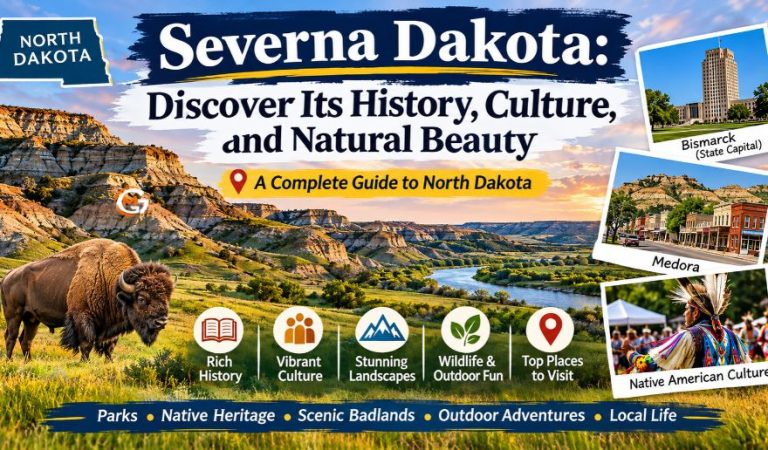
Severna Dakota is another name for North Dakota, a state in the northern United States. The name appears in languages such as Slovenian and Serbian. In English, the state is called North Dakota. It is known for open prairies, dramatic Badlands, and a landscape that feels far removed from crowded cities.
Its story runs much deeper than its scenery. Native nations shaped the region for centuries before statehood, and their cultures remain active today. Farming, trade, railroads, ranching, and energy production have also influenced the state’s communities and economy.
Whether you are planning a road trip or simply exploring American geography, North Dakota offers plenty to discover. This guide covers its history, cultural traditions, wildlife, famous attractions, major cities, and practical advice for visiting.
Quick info: North Dakota at a Glance
| Detail | Information |
|---|---|
| Name in English | North Dakota |
| Alternative name | Severna Dakota |
| Country | United States |
| Region | Northern Great Plains |
| Capital | Bismarck |
| Largest city | Fargo |
| State abbreviation | ND |
| Statehood | November 2, 1889 |
| Common nickname | Peace Garden State |
| Northern border | Canada |
| Neighboring U.S. states | Minnesota, South Dakota, Montana |
| Major river | Missouri River |
| Famous lake | Lake Sakakawea |
| Notable national park | Theodore Roosevelt National Park |
What Does Severna Dakota Mean?
Severna Dakota means North Dakota; it is not a separate country, city, or U.S. state. The wording is used in some South Slavic languages, including Serbian, and in Slovenian. English maps, road signs, government information, and travel bookings generally use North Dakota instead. The word “Dakota” comes from the name of Indigenous Dakota peoples, whose history is closely tied to the northern plains. Knowing the English name helps international visitors find correct directions, accommodations, and official park information without confusing this state with South Dakota.
Where Is North Dakota Located?
North Dakota sits in the north-central United States, directly below the Canadian provinces of Saskatchewan and Manitoba. Montana lies to the west, South Dakota to the south, and Minnesota to the east. Its eastern Red River Valley is largely flat and productive farmland. Central areas have rolling hills, lakes, and river valleys, while the west contains rugged Badlands. The Missouri River crosses the state and helps shape its landscape. Long distances between towns are common, so travelers should not expect the same transport options available in large metropolitan areas.
North Dakota’s History: From Early Communities to Statehood
Indigenous Communities Before European Settlement
Long before modern state boundaries existed, communities including the Mandan, Hidatsa, Arikara, Dakota, and Lakota lived, traveled, traded, and maintained ties across this region. Along the Missouri River, Mandan and Hidatsa communities grew corn, beans, and squash and built substantial earthlodge villages. Other groups followed seasonal routes connected to bison hunting and trade. These societies had their own languages, governments, and traditions. Their history is central to understanding the state, rather than simply a chapter before European arrivals.
Territory, Railroads, and Statehood
European and American traders entered the region through the fur trade, followed by greater settlement and railroad expansion during the nineteenth century. The Dakota Territory was formed in 1861. As rail connections and farming grew, new towns appeared, often amid serious conflicts and dispossession affecting Native peoples. On November 2, 1889, North Dakota and South Dakota both became U.S. states. Agriculture remained vital, while later oil development and other industries added new opportunities and challenges for communities across the region.
Indigenous Heritage and Living Traditions
North Dakota’s Native American heritage is not confined to museums or historic sites. Tribal Nations maintain governments, cultural institutions, ceremonies, languages, and modern communities. They include the Mandan, Hidatsa and Arikara Nation, Spirit Lake Nation, Standing Rock Sioux Tribe, Turtle Mountain Band of Chippewa, and Sisseton Wahpeton Oyate, whose communities and connections cross present-day borders. Powwows, beadwork, storytelling, music, and language revitalization share cultural knowledge across generations. Visitors should follow photography rules, respect sacred places, and remember that public celebrations are only one part of living Indigenous cultures.
Natural Beauty: Prairies, Badlands, Rivers, and Lakes
Mast Read: Eractoll Guide: How Enterprise Rental Car Toll Charges Workc
The landscape changes sharply as you cross North Dakota. In the east, broad fields and the Red River Valley stretch toward the horizon. Farther west, grasslands give way to the Little Missouri Badlands, where erosion has carved layered cliffs, buttes, and colorful hills. Lake Sakakawea, a vast reservoir on the Missouri River, offers fishing, boating, and shoreline recreation. The Turtle Mountains in the north add wooded hills and lakes. Together, these landscapes make the state appealing to photographers, nature lovers, and travelers who enjoy quiet open spaces.
Wildlife and Outdoor Adventures
Wildlife watching is one of the state’s most rewarding activities. Theodore Roosevelt National Park shelters bison, prairie dogs, deer, and many bird species; its South Unit also has free-roaming horses. Elsewhere, wetlands and wildlife refuges attract migratory waterfowl. Visitors can hike prairie trails, camp under dark skies, cycle portions of the Maah Daah Hey Trail, or explore lakes by boat. Animals remain wild even when they seem calm. Keep a safe distance, never feed them, and prepare for changing weather, limited shade, and patchy mobile service in remote places.
Best Places to Visit in North Dakota
Theodore Roosevelt National Park and Medora
Theodore Roosevelt National Park is a highlight of western North Dakota. Its South Unit begins near Medora, while the North Unit is reached from the Watford City area. Scenic roads, overlooks, and hiking trails reveal the Badlands and opportunities to watch wildlife. A third area, the Elkhorn Ranch Unit, is more remote and reflects Theodore Roosevelt’s ranching years. Medora is a convenient base with Western-themed attractions and seasonal entertainment. Before visiting, check road conditions and the status of trails or park facilities, especially outside summer.
International Peace Garden and Knife River Villages
The International Peace Garden lies on the North Dakota–Manitoba border and celebrates friendship between the United States and Canada. Gardens, natural areas, and a conservatory make it an unusual destination, although international visitors should check border-entry document rules. Near Stanton, Knife River Indian Villages National Historic Site preserves remains of Hidatsa settlements and provides a reconstructed earthlodge that helps explain community life along the Missouri. These sites offer very different experiences: one emphasizes international friendship, while the other explores the region’s rich Indigenous history.
Major Cities and Everyday Life
Fargo, the state’s largest city, sits beside the Red River and offers museums, restaurants, colleges, and a lively arts scene. Bismarck, the capital, provides access to the Missouri River and the North Dakota Heritage Center & State Museum. Grand Forks has a strong university presence, while Minot serves as an important regional center. Smaller towns often revolve around farming, local businesses, schools, and community events. Life varies across the state: urban neighborhoods have modern amenities, but rural travel may involve long drives and fewer services.
Food, Festivals, and Local Culture
North Dakota’s food reflects Native traditions alongside later Scandinavian, German, and other immigrant influences. Local favorites include knoephla soup, a creamy dish with small dumplings; kuchen, a fruit-filled or custard-style cake; and lefse, a soft potato flatbread. Community celebrations bring these traditions into public view through food, music, and crafts. Rodeos, county fairs, and powwows also form part of the cultural calendar, although they have distinct histories and purposes. For the best experience, seek out locally run events and learn their etiquette before attending.
Weather and the Best Time to Visit
North Dakota has warm summers and cold winters, with sharp changes in temperature throughout the year. June through September is generally a convenient period for road trips, camping, and enjoying parks, though summer thunderstorms and heat are possible. Fall offers cooler hiking weather and changing colors in wooded areas. Winter brings snow, strong winds, and sometimes dangerous driving conditions, but it can also suit visitors interested in winter landscapes. Spring can be muddy or affected by flooding. Check local forecasts and seasonal park notices rather than relying on the calendar alone.
Practical Travel Tips for International Visitors
North Dakota is easiest to explore by car, especially when combining cities with national parks and smaller historic sites. Fargo, Bismarck, Minot, and Grand Forks have regional airports, but flight schedules and rental options vary. Reserve lodging early for busy summer weekends and local events. Keep fuel in the vehicle before long rural stretches, and carry water, weather-appropriate clothing, and offline maps. Visitors from the United Kingdom or other countries should confirm U.S. entry requirements before departure. A trip involving the International Peace Garden also requires attention to border documentation.
Final Thoughts
Severna Dakota may sound unfamiliar to English-speaking readers, but the place behind the name is North Dakota: a state with remarkable scenery and a complex, continuing human story. From the Little Missouri Badlands to the Red River Valley, its landscapes reward patient exploration. Just as important are the Tribal Nations, historic communities, and local traditions that give those landscapes meaning. A thoughtful visit leaves time for both outdoor experiences and the people who call the state home.
FAQs
Is Severna Dakota the Same as North Dakota?
Yes. Severna Dakota is a name used for North Dakota in languages such as Slovenian and Serbian. On English-language maps and official U.S. materials, look for North Dakota.
Where Is Severna Dakota Located in the United States?
North Dakota lies along the Canadian border in the northern Great Plains. It borders Montana, South Dakota, and Minnesota, with Saskatchewan and Manitoba directly to its north.
What Is the Capital of Severna Dakota?
Bismarck is North Dakota’s capital. It is located near the Missouri River and houses the state government, major historical exhibits, and several cultural attractions.
What Is North Dakota Most Famous For?
It is especially known for Theodore Roosevelt National Park, the Badlands, wide prairies, Indigenous heritage, farming, and its Peace Garden State nickname. The area is also linked to Roosevelt’s ranching years.
What Are the Best Places to Visit in North Dakota?
Popular choices include Theodore Roosevelt National Park, Medora, the International Peace Garden, and Knife River Indian Villages National Historic Site. Fargo and Bismarck also offer museums and city attractions.
What Is the Best Time of Year to Visit North Dakota?
Summer is usually easiest for sightseeing and outdoor activities because days are longer and many services operate seasonally. Late spring and early fall can be pleasant, but weather varies.
What Wildlife Can You See in North Dakota?
Depending on the location and season, visitors may see bison, deer, prairie dogs, pronghorn, eagles, and migrating waterfowl. National parks and wildlife refuges are good places to look safely.
Is North Dakota Worth Visiting for International Tourists?
Yes, particularly for travelers who enjoy national parks, road trips, wildlife, and American regional history. Plan for long driving distances, changing weather, and entry requirements before traveling.
For More News and Daily Updates Visit: Gigly Magazine
