

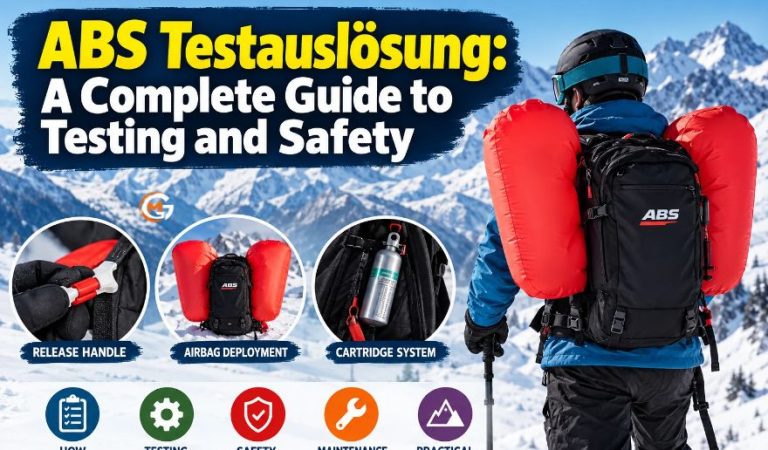
ABS Testauslösung is an important safety practice for people who use ABS avalanche airbag backpacks. The German term refers to a test deployment that helps users understand how their equipment works. For skiers, snowboarders, and mountain travelers, knowing how to activate an avalanche airbag can be valuable during an emergency.
Avalanche airbag systems are designed to help reduce the risk of deep snow burial. However, they must be prepared and operated correctly. A controlled test allows users to practice pulling the release handle, observe the inflation process, and identify possible equipment problems before entering avalanche terrain.
This guide explains how ABS Testauslösung works, when testing is recommended, what equipment is needed, and which precautions matter most. It also covers maintenance, common faults, testing costs, and the limitations of avalanche airbags.
Quick Overview of ABS Testauslösung
| Detail | Information |
|---|---|
| Term | ABS Testauslösung |
| English Meaning | ABS test deployment |
| Equipment Type | Avalanche airbag backpack |
| Brand | ABS |
| Primary Purpose | Test airbag deployment |
| Main Users | Skiers and snowboarders |
| Typical Environment | Backcountry and avalanche terrain |
| Activation Method | Release handle |
| Inflation Technology | Model-dependent gas or electronic system |
| Main Components | Airbag, trigger, inflation unit |
| Testing Frequency | Follow model-specific guidance |
| Main Benefit | Equipment checks and practice |
| Maintenance Needs | Inspection and approved servicing |
| Safety Limitation | Cannot prevent every avalanche injury |
| Important Requirement | Follow the official product manual |
What Is ABS Testauslösung?
ABS Testauslösung means the controlled testing of an ABS avalanche airbag deployment system. The word Testauslösung combines the German words for testing and triggering. In this context, ABS refers to the avalanche safety equipment manufacturer, not the anti-lock braking system found in vehicles. An ABS test deployment helps confirm whether an avalanche backpack can activate as expected. It also gives users hands-on experience with the release mechanism. This matters because emergencies often happen suddenly, leaving little time to think about equipment operation.
The test may involve a complete airbag inflation or a manufacturer-approved practice activation without inflation. The available method depends on the exact backpack model. Some ABS systems use compressed-gas cartridges, while newer designs may have different operating mechanisms. Users should never assume that instructions for one model apply to another. The main goal is to check equipment readiness and build confidence through safe, controlled practice.
How Does an ABS Avalanche Airbag System Work?
An avalanche airbag backpack contains an inflatable safety system designed to help a person remain closer to the surface of moving avalanche debris. When the release handle is activated, the inflation mechanism fills the airbag. The increased volume can improve the user’s chances of avoiding deep burial through a process sometimes called granular segregation. Larger objects may move toward the surface of flowing snow, although actual outcomes depend on terrain, avalanche conditions, and other factors.
Traditional ABS systems use a cartridge and a trigger mechanism to inflate the airbag. Certain models feature two inflatable sections positioned beside the backpack. These designs aim to provide additional volume and some redundancy. However, the exact components, inflation process, and reset instructions vary by product generation. A successful deployment does not guarantee survival, and the airbag cannot stop the avalanche itself.
Main Features of ABS Avalanche Airbag Systems
ABS avalanche backpacks combine safety equipment with a practical carrying system for mountain activities. Their features are designed to support rapid deployment while allowing users to carry other essential gear. Understanding these components makes inspections and training more effective.
Airbag Design and Inflation System
Many traditional ABS backpacks use a dual-airbag design, with inflatable sections extending from both sides. The system increases the person’s overall volume during an avalanche. The airbag material, inflation valves, and gas supply must remain in suitable condition. Some newer ABS products use different designs, so the product manual remains the best guide to individual features.
Release Handle and Safety Components
The release handle allows users to activate the inflation system quickly. Depending on the model, the backpack may also include a cartridge connection, status indicator, safety lock, and specialized release mechanism. Shoulder straps, a waist belt, and a leg strap or equivalent retention system help keep the backpack securely attached. All required fastening components should be used as directed.
Why Is ABS Testauslösung Important?
Regular practice helps users become familiar with the release handle and the movement needed to activate it. During an avalanche, fear, cold temperatures, thick gloves, and sudden motion can make simple actions difficult. A controlled test allows users to observe the deployment and gain experience before facing dangerous conditions. It can also reveal visible damage, incorrect setup, or unusual inflation behavior. However, even a successful test only confirms performance under those particular conditions. It does not prove that the system will work perfectly during every future emergency.
When Should You Perform an ABS Testauslösung?
Mast Read: Tracqueur: Types, Applications, and Important Safety Tips
ABS recommends a real training deployment with a filled cartridge before each winter season for applicable cartridge-based systems. This practice helps users check the system and rehearse activation. Additional inspection may be needed after a fall, accidental deployment, equipment damage, or prolonged storage. A backpack involved in an avalanche should receive appropriate professional assessment before reuse. Some ABS systems also require periodic manufacturer servicing. Testing frequency and servicing intervals can vary, so users should follow the instructions for their specific model rather than relying on a single schedule for every backpack.
Equipment and Preparation Before Testing
Before performing an ABS Testauslösung, identify the exact backpack model and review its operating instructions. Check that the airbag compartments, release handle, straps, and inflation components show no obvious damage. If the system uses a gas cartridge, confirm that it is compatible, correctly filled, and within the manufacturer’s specified requirements. Never substitute an unapproved cartridge or modify the inflation mechanism. Choose an open testing area away from people, sharp objects, heat sources, and obstacles. There must be enough room for the airbag to expand safely.
How to Perform an ABS Testauslösung Safely
A controlled test should follow the official instructions for the exact ABS system. The general process includes preparation, activation, inspection, and restoring the backpack to working condition. Because inflation mechanisms differ, the following steps are an overview rather than a replacement for the product manual.
Step 1: Inspect the Backpack
Examine the backpack for cuts, worn straps, damaged stitching, and blocked airbag compartments. Check the release handle and visible inflation components. Stop if anything appears damaged or incorrectly assembled.
Step 2: Prepare the Inflation System
Follow the manufacturer’s instructions for installing a compatible cartridge or preparing the relevant inflation unit. Confirm the required status indicators before proceeding. Do not attempt improvised repairs.
Step 3: Perform the Controlled Activation
Position yourself as instructed, maintain adequate clearance, and activate the release handle. Observe whether the airbag opens and inflates correctly. Keep other people outside the deployment area.
Step 4: Inspect and Restore the System
Check the inflated airbag for obvious leaks or damage. Deflate and fold it according to the manual. Replace, refill, recharge, or reset any components as required before returning the backpack to service.
Important Safety Precautions During Testing
An avalanche airbag contains components that may release substantial force during activation. Safe preparation is therefore essential. Never point a deployment area toward another person, tamper with pressurized components, or attempt to refill a cartridge without approved equipment and authorization. Some older ABS release handles contain a one-use pyrotechnic mechanism and require special handling. Keep these parts away from children and follow all manufacturer warnings. A test should never be performed in dangerous avalanche terrain simply to check whether the backpack works.
Common ABS Testauslösung Problems and Solutions
Problems may involve the release handle, cartridge, inflation mechanism, or airbag material. Recognizing warning signs helps prevent unsafe equipment use. Do not take a backpack into avalanche terrain if its deployment system is unreliable.
The Airbag Does Not Deploy
Possible causes include an incorrectly prepared system, an incompatible or empty cartridge, a damaged trigger, or a mechanical fault. Check the relevant status indicators and manufacturer instructions. If the cause remains unclear, contact an authorized service provider.
The Airbag Inflates Incorrectly
Partial or slow inflation can indicate a gas supply problem, airbag damage, an obstructed component, or another fault. Do not rely on the system until the issue has been assessed and corrected.
The Release Handle Is Damaged
A cracked, loose, expired, or otherwise defective trigger component may prevent proper operation. Never force damaged parts or attempt unauthorized repairs. Use manufacturer-approved replacement and servicing procedures.
Maintenance and Care After Testing
After a full deployment, the system must be restored correctly before another mountain trip. Cartridge-based ABS systems generally require replacement or approved refilling of used gas components, while some older models also require a replacement release handle. Inspect the airbag, valves, fabric, straps, and fastening points. Follow the correct folding sequence to prevent deployment problems. Store the backpack in a dry, suitable environment away from damaging heat and moisture. ABS also recommends periodic professional inspections for applicable systems, with intervals depending on the model, age, and usage.
Benefits and Limitations of ABS Testauslösung
Testing provides several practical benefits. It helps users become familiar with deployment, confirms certain equipment functions, and may reveal visible faults before an emergency. Practice can also reduce hesitation when reaching for the release handle. However, full deployment may consume a cartridge and require additional servicing costs. Testing cannot reproduce every situation encountered during an avalanche. Even a properly inflated airbag may fail to prevent burial or serious injury, particularly in terrain traps or areas with rocks and trees.
ABS Testauslösung vs. Other Airbag Testing Methods
Other avalanche airbag manufacturers offer different training options. Certain mechanical systems allow practice pulls without using a gas cartridge, while some electronic systems support repeated deployments after charging. These methods may reduce the cost of practicing activation. However, the availability of dry-trigger testing depends on the exact product. A training mechanism approved for one brand or model must not be used as a guide for another. For ABS equipment, always confirm which practice methods are officially supported.
Avalanche Safety Beyond the Airbag
An avalanche airbag is only one part of backcountry safety. Everyone entering avalanche terrain should understand local avalanche forecasts, terrain hazards, snow conditions, and emergency rescue procedures. Essential companion-rescue equipment includes:
– An avalanche transceiver, probe, and shovel, together with the knowledge and practice needed to use them effectively.
A properly fitted airbag backpack should be worn with all required straps fastened. Training in avalanche awareness and rescue remains essential because airbags cannot eliminate the danger of burial, traumatic injury, or hazardous terrain.
Final Thoughts
ABS Testauslösung is a valuable part of avalanche airbag preparation. Controlled testing helps users understand their equipment, practice deployment, and recognize possible faults. Correct maintenance and model-specific instructions are essential for keeping the system ready.
However, no safety device can remove every risk associated with avalanches. The best approach combines well-maintained equipment, practical training, sound judgment, and careful terrain decisions.
FAQs
1. What Does ABS Testauslösung Mean in English?
ABS Testauslösung means ABS test deployment or test activation. It refers to checking the deployment mechanism of an ABS avalanche airbag backpack. The procedure helps users practice activation and confirm certain equipment functions.
2. How Often Should You Perform an ABS Testauslösung?
For applicable cartridge-based ABS systems, the manufacturer recommends a real practice deployment before each winter season. Additional checks may be needed after damage, unusual operation, or long storage. Always follow the schedule specified for your particular backpack.
3. Can You Test an ABS Avalanche Airbag Without a Cartridge?
Some ABS models offer manufacturer-approved practice methods without full inflation. However, a complete inflation test on a traditional cartridge-based system requires the correct filled cartridge. Never assume that cartridge-free practice is supported without checking the manual.
4. Is It Safe to Perform an ABS Testauslösung at Home?
Testing may be possible in a suitable open area if the manufacturer permits it and all safety requirements are met. Avoid confined spaces and nearby people. Professional assistance is preferable when equipment condition or operating instructions are uncertain.
5. What Should You Do if the ABS Airbag Does Not Deploy?
Stop using the system until the problem is identified. Check approved status indicators and preparation instructions. Do not repeatedly force the trigger or disassemble pressurized components. Contact an authorized service center if the fault remains unresolved.
6. Do You Need a New Cartridge After an ABS Testauslösung?
A complete deployment using a traditional gas cartridge consumes its charge. The cartridge must be replaced or refilled through an approved service before reuse. Some older ABS systems also require replacement of the activation handle after deployment.
7. How Much Does an ABS Testauslösung Cost?
The cost depends on the backpack model, cartridge type, refill or exchange service, and country. A full deployment may involve cartridge servicing and replacement trigger components. Professional inspections can add further costs, so check current regional service prices.
8. Does a Successful ABS Testauslösung Guarantee Avalanche Safety?
No. A successful test demonstrates that the equipment operated during that particular check. It does not guarantee future deployment or survival. Avalanche education, terrain assessment, rescue equipment, and responsible decisions remain necessary for safer backcountry travel.
For More News and Daily Updates Visit: Gigly Magazine
