

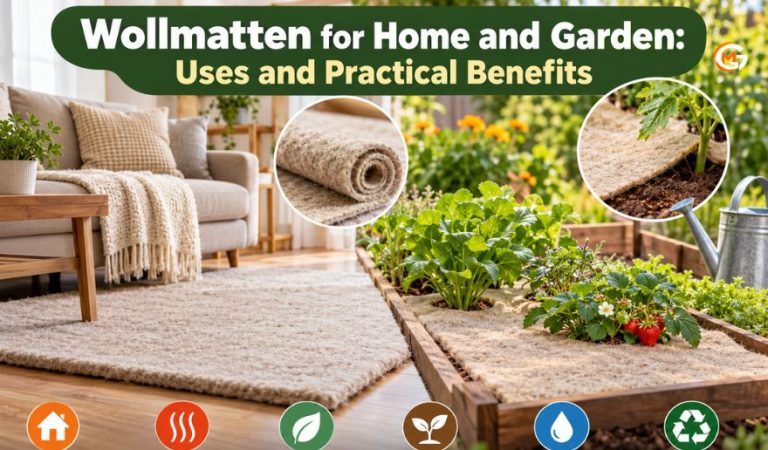
Wollmatten are wool mats used for comfort, protection, and practical work around the home and garden. The German word means “wool mats,” but it covers different products, from decorative felt floor coverings to dense sheets made for mulching soil.
Their appeal comes from the natural properties of sheep’s wool. Wool fibers provide cushioning, trap air, and absorb moisture. In gardens, a properly fitted wool layer can cover bare ground and help reduce water loss between watering sessions.
However, not every wool mat belongs outdoors. Material, thickness, backing, and cleaning requirements all affect performance. This guide explains how to choose, use, and maintain the right type without relying on exaggerated claims.
Wollmatten Quick Bio
| Detail | Information |
|---|---|
| English meaning | Wool mats |
| Main material | Sheep’s wool |
| Common constructions | Felted, woven, needle-punched |
| Indoor products | Rugs, pads, floor protectors |
| Garden products | Mulch sheets, planting mats |
| Main indoor benefit | Warmth and cushioning |
| Main garden benefit | Soil coverage |
| Weed control | Reduces some weed growth |
| Moisture function | Helps limit evaporation |
| Soil contribution | Organic matter as it decomposes |
| Typical colors | Natural or dyed |
| Cleaning method | Depends on care label |
| Garden lifespan | Varies with conditions |
| Compostability | Only untreated, natural wool |
What Are Wollmatten Made Of?
Most genuine Wollmatten use sheep’s wool, although the amount of wool and the manufacturing process vary. Felted mats are made by binding fibers into a compact sheet, while woven products resemble small rugs. Some mats contain cotton, synthetic fibers, adhesives, or a non-slip backing. These additions may improve strength or floor grip, but they can change how the product should be washed or disposed of. Always check the fiber label instead of assuming that every mat sold as wool is entirely natural.
Main Types of Wool Mats
Indoor wool mats are often designed for bedrooms, living areas, entryways, or spaces where people stand for long periods. They may be soft rugs, thick felt pads, or protective layers placed beneath furniture. Garden wool mats serve a different purpose. Usually sold as mulch sheets, fleece rolls, or planting discs, they cover soil around vegetables, flowers, and shrubs. Loose wool and wool pellets are related gardening materials, but they are not the same as a manufactured mat. Choosing the correct format makes installation and maintenance much easier.
How Do Wollmatten Work?
Wool has a naturally crimped fiber structure that holds pockets of air, which helps explain its insulating feel indoors. Its fibers can also take up moisture without behaving like a waterproof barrier. On garden soil, the main benefit comes from coverage: a continuous mat shades the surface, slows evaporation, and blocks light from reaching some germinating weeds. Wool contains nitrogen and sulfur, but those nutrients become available gradually as soil organisms break down the fibers. A wool mat should not replace regular watering or a suitable fertilizer plan.
Benefits of Wollmatten Inside the Home
A well-made wool mat can soften hard flooring, add texture to a room, and make cold surfaces feel more comfortable underfoot. Dense felt also helps protect floors or furniture from minor scratches and vibration. These benefits depend on thickness and construction; a thin felt sheet will not perform like a heavy rug. Wool is not automatically stainproof or washable, and it should not remain wet against wood flooring. For smooth floors, look for a stable, non-slip design or a separate rug pad that is compatible with the surface.
Mast Read: allysplay.com website Review: Features, Benefits, and Limitations for Gaming Enthusiasts
Best Garden Uses for Wool Mulch Mats
Wool mulch mats are especially practical around established vegetables, flowering plants, berries, and shrubs. In raised beds, they can cover open areas between plants while leaving space for stems to grow. In large containers, pre-cut wool discs can reduce exposed potting mix and help it dry less quickly. For vegetable gardens, choose mats sold for horticultural use rather than dyed home décor felt. Weed suppression works best after existing weeds have been removed; a wool covering will not reliably stop strong perennial weeds growing from established roots.
The same material can offer some protection from rapid changes in soil temperature, although the effect depends on climate, season, and mat color. Decomposing wool may eventually return organic matter and nutrients to the soil, but this happens slowly and unevenly. Gardeners should be cautious about promises that wool alone will prevent slug damage. Wool pellets and similar barriers have not consistently protected plants in controlled tests, so use established pest-management methods where needed.
How to Lay Wollmatten in Garden Beds
Begin with weed-free soil and water it if the ground is dry. Then measure the bed and choose a mat that can cover exposed soil without smothering plant crowns. The process is simple:
- Remove large weeds, stones, and sharp debris.
- Lay the mat flat, with edges meeting closely.
- Cut generous openings around stems and new growth.
- Pin down loose corners with suitable garden pegs.
- Water slowly and confirm that moisture reaches the soil.
For new planting, cut openings before placing seedlings. Leave a little clear space around stems to limit prolonged damp contact. Check the mat after wind or heavy rain; bunched or lifted sections reduce coverage and can expose young plants.
Choosing Quality Wollmatten for Each Purpose
Start with the intended location. For indoor use, compare softness, density, backing, grip, and cleaning instructions. For outdoor use, look for untreated wool products clearly identified as suitable for soil contact and, when relevant, food crops. Thickness matters: a mat that is too thin may let light through, while a very dense sheet needs checking to ensure water penetrates. Ask whether added fibers, dyes, adhesives, or pest treatments are present. A product described as natural is not necessarily plastic-free or home-compostable. Compare price by area covered, not only by roll or pack.
Cleaning and Storing Wool Mats
Vacuum indoor mats regularly to remove grit before it settles deep into the fibers. Blot spills with a clean, absorbent cloth rather than rubbing, and test a wool-safe cleaner on a hidden area. Follow the manufacturer’s instructions before machine washing; hot water, agitation, and unsuitable detergent may cause shrinkage or felting. Dry mats thoroughly before putting them back on the floor or into storage. Keep stored wool clean and dry, and inspect it occasionally for clothes-moth activity. Never move a soil-used garden mat indoors for household use.
Limits and Common Problems
Wollmatten have drawbacks. Quality wool products can cost more than coir, straw, or synthetic floor mats. Indoor pieces may shed at first, collect stains, or develop musty odors if they stay damp. Outdoor mats gradually break down, and their useful life depends on rainfall, soil conditions, fiber density, and handling. Thick mats can become displaced in wind, while gaps may allow weeds to establish. If water runs off instead of soaking through, lift an edge and check the soil rather than assuming the roots received enough moisture.
Simple Fixes for Everyday Issues
For a slippery indoor rug, use a suitable anti-slip underlay. For odors, dry the mat completely and inspect the floor beneath it; persistent smells may require professional cleaning. In the garden, close gaps, secure corners, and clear weeds while they are small. Replace sections that have become too thin to shade soil. Avoid piling damp wool against plant stems, and do not compost a product containing synthetic backing or chemical treatments unless its manufacturer confirms it is suitable.
Practical Alternatives to Wollmatten
Wool is not always the simplest choice. For garden beds, straw and shredded leaves are inexpensive options that can improve soil cover, though wind may move them. Wood chips suit many established borders and paths, while coir or jute mats offer plant-based sheet coverings. Reusable woven ground covers may provide longer-lasting weed control but require removal and responsible disposal. Indoors, cotton rugs are often easier to wash, and synthetic mats may resist moisture better in busy entrances. Match the material to cleaning needs, budget, and location rather than assuming one option is best everywhere.
Final Thoughts
Wollmatten can be useful in two very different settings: comfortable, protective surfaces indoors and biodegradable soil coverings outdoors. The key is to buy a product designed for the job. Check its composition, install it correctly, and monitor moisture and wear. Wool has real advantages, but it works best as part of sensible home care or garden management, not as a solution to every problem.
FAQs
What are Wollmatten made from?
Most are made mainly from sheep’s wool. They may be felted, woven, or needle-punched. Some include synthetic fibers, backing, dyes, or adhesives, so read the product label if you need pure wool or a compostable garden mat.
Can Wollmatten be used indoors and outdoors?
Yes, but different versions serve different purposes. Indoor wool rugs are made for comfort and floor protection. Garden mats are designed for soil contact and gradual breakdown. Do not assume an indoor felt mat is suitable for planting beds.
Do wool mats stop weeds in the garden?
A dense, well-fitted wool mat can reduce the growth of many weeds by limiting the light reaching soil. It will not eliminate every weed, especially deep-rooted perennials or plants growing through gaps and planting holes.
Are Wollmatten suitable for vegetable gardens?
Yes, provided the material is sold for garden use and does not contain unsuitable dyes, coatings, or treatments. Leave room around plant stems, make sure water reaches the soil, and continue normal feeding and pest checks.
How long do garden wool mats last?
There is no fixed lifespan. Thickness, moisture, temperature, and soil activity influence how quickly wool deteriorates. Some mats remain useful beyond one growing season, while thinner products need earlier replacement. Inspect coverage rather than relying on a date.
Can wool mats go in a washing machine?
Only if the maker’s care instructions allow it. Heat and agitation can shrink or distort wool. Many rugs and felt pads are better maintained with vacuuming, careful spot treatment, and professional cleaning when necessary.
Do Wollmatten add nutrients to garden soil?
Natural wool contains nitrogen and sulfur. As microorganisms break down its keratin fibers, some nutrients may enter the soil gradually. The speed and quantity vary, so wool mulch is not a predictable substitute for testing soil and fertilizing plants appropriately.
Are Wollmatten environmentally friendly?
Untreated sheep’s wool is renewable and biodegradable, and using lower-grade wool can reduce waste. However, washing, processing, transport, dyes, and plastic backing affect the overall footprint. Check the complete product before making an environmental claim.
For More News and Daily Updates Visit: Gigly Magazine
