

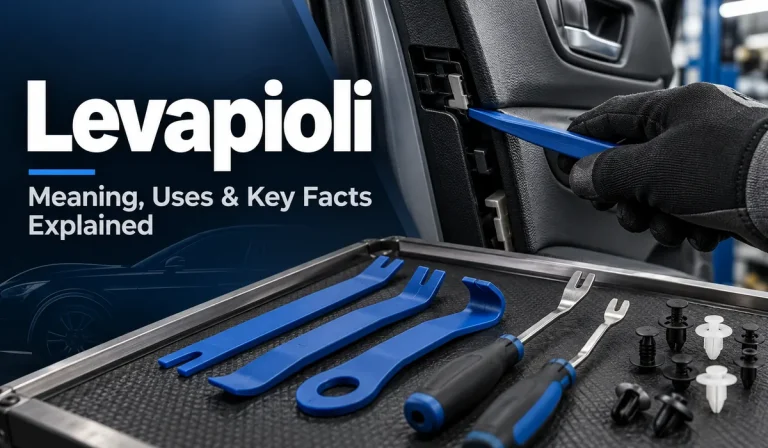
Levapioli is an Italian term used for tools that remove pins, clips, and small fasteners, especially from vehicles. These tools help mechanics and car owners take off interior panels without relying on an ordinary screwdriver. The name may seem unfamiliar outside Italy, but the job it describes is common.
Door trims, dashboard pieces, and protective covers often depend on hidden clips. Removing them takes patience and the right amount of pressure. A suitable removal tool makes the work more controlled, although it cannot guarantee that every clip will survive.
This guide explains what the term means, the types of tools available, and how to use them. It also covers common mistakes, buying considerations, and alternative tools for difficult jobs.
Quick Bio: Levapioli at a Glance
| Detail | Information |
|---|---|
| Name | Levapioli |
| Language | Italian |
| Documented meaning | Pin or clip removal tool |
| Main field | Automotive repair |
| Typical task | Releasing trim fasteners |
| English description | Trim clip remover |
| Common materials | Nylon, steel |
| Common tip shapes | Forked, flat, curved |
| Typical work areas | Doors, dashboards, panels |
| Main users | Mechanics, DIY car owners |
| Power required | None for hand tools |
| Main advantage | Controlled access to clips |
| Main risk | Scratches or broken fasteners |
| Related tool | Clip-removal pliers |
What Is Levapioli?
In professional tool catalogs, Levapioli describes hand tools designed to lift or remove retaining pins and clips. These small parts secure door cards, trim panels, moldings, and other vehicle fittings. Manufacturer Beta Tools lists nylon and metal versions in its automotive bodywork range. It also sells stainless-steel blade styles. The word describes a practical tool type, not a single product with one fixed shape. In English-speaking markets, shoppers are more likely to find similar products under names such as trim clip remover, panel removal tool, or fastener extractor. The exact match depends on the tip and intended clip.
What Does the Name Mean, and Is It a Food?
The term combines Italian elements associated with removing or lifting and with pioli, meaning pegs or pins. Its meaning becomes clear when it appears beside bodywork equipment in an Italian catalog. Some general-interest websites instead link the similar-looking word to Balkan grilled meat. That interpretation should not be treated as a verified traditional food name. The established dish is ćevapi, also known as ćevapčići. Similar spelling is not evidence that the tool term and the food term have the same origin or meaning. Context is the safest guide.
How Does a Levapioli Work?
Most versions use simple hand pressure and leverage. A thin tip slides beneath a fastener head or reaches the space between a panel and its mounting surface. Moving the handle carefully then helps lift or release the clip. Forked tips can support both sides of a pin, while wider wedges spread pressure over a larger area. The correct motion depends on the fastener: some release outward, others need a locking tab pressed first, and some panels must lift upward after their clips are free. Forcing the wrong movement can break an otherwise usable part.
Main Types and Features of Levapioli Tools
Nylon Trim Removal Tools
Nylon tools are often a good first choice around painted surfaces and soft plastic trim. Their edges are generally less likely to leave metal scratches, and wider shapes can help separate tight panel joints. They are not damage-proof, however. A sharp edge, trapped grit, or too much force can still mark a finish. Flexible tips may also bend when used on very stiff fasteners.
Metal and Stainless-Steel Tools
Metal versions offer a thinner, firmer working end for clips that are hard to reach. Stainless-steel blade models and five-piece metal sets are sold for automotive work. Their rigidity can make precise lifting easier, but direct contact with visible trim or paint needs extra care. Use them where the fastener can be reached without scraping nearby surfaces.
Different Tip Shapes and Sets
A narrow fork can fit around a clip stem, a curved end can improve access, and a broad wedge suits some panel edges. No tip works for every vehicle. Sets provide a useful choice of shapes, while a single remover may be enough for occasional jobs involving one familiar fastener type.
Where Are These Tools Commonly Used?
A Levapioli is most useful when a component is held by push clips rather than screws alone. Typical jobs include removing door panels to reach speakers or window parts, loosening interior trim around a dashboard, and releasing certain plastic fittings in a vehicle’s cabin. Similar tools can help during accessory installation, inspections, and some motorcycle trim work. Before starting, identify what actually holds the part in place. Decorative covers may hide screws, and a panel can also have electrical connectors or mechanical cables behind it. The tool releases suitable fasteners; it does not replace the full removal procedure.
Mast Read: Cavazaque and Kawasaki: Understanding the Name and Motorcycle Connection
What Should You Check Before Starting?
Look up the repair procedure for the exact vehicle, model year, and panel. Make a quick check for three things: • hidden screws and locking tabs; • electrical connectors and cables; • nearby safety equipment. Put the car on a stable surface, switch it off, and keep the area well lit. Have a matching replacement clip ready because older plastic can be brittle. Clean grit from the panel edge and consider protective tape where the tool might touch an exposed finish. If work is near airbags, seat-belt equipment, or high-voltage vehicle components, follow manufacturer safety instructions rather than treating the task as ordinary trim removal.
How to Use Levapioli to Remove a Trim Clip
First, locate the fastener rather than pulling at the middle of the panel. Remove any screws and release any visible locks. Choose a tip that fits beside or around the clip, then slide it in with only enough pressure to reach the retaining point. Lift gradually and support the panel with your free hand. As one clip releases, move to the next instead of bending the whole panel sharply. If it resists, stop and check for another attachment. Once free, disconnect any cables or plugs according to the repair guide. Before fitting the panel again, inspect each clip, replace broken ones, and line them up with their mounting holes.
Common Problems and How to Avoid Damage
The Clip Will Not Come Out
A stuck clip is not always a tight clip. There may be a hidden screw, a central locking pin, or a tab that needs a different movement. Recheck the fastening system before increasing force. A different fork size or clip-removal pliers may provide better access.
A Plastic Clip Breaks
Repeated removal, age, cold conditions, and sideways pulling can damage plastic fasteners. Do not leave broken pieces inside the panel cavity. Remove them carefully, check the mounting hole, and use a replacement of the correct type. Reusing a damaged clip can cause rattles or loose trim.
The Panel Gets Scratched or Bent
Grit beneath the tip may scratch even when a nylon tool is used. Clean contact points and protect exposed edges where appropriate. Apply pressure close to each fastener instead of levering against a large unsupported section. Stop if the panel begins to crease, whiten, or distort.
How to Choose the Right Tool
Start with the clip type, not the brand name. Choose a forked tip for a visible pin stem, a broad nylon wedge for a delicate panel seam, or a rigid narrow tool when access is limited. Check tool dimensions and whether the handle gives enough control in a cramped space. For example, Beta’s 1479U/13 stainless-blade model is listed with a 95 mm blade and 220 mm overall length, while its 1479N/S5 is a five-piece nylon set. Those examples show why shape and reach matter more than simply buying the largest kit.
Benefits, Limitations, and Useful Alternatives
The main benefit is better control than using a household screwdriver, which can slip or concentrate force on a small area. A dedicated remover may help preserve trim and make routine service easier. Still, no tool makes brittle clips reusable or turns every panel into a simple pull-off part. Metal tips can mark finishes, and the wrong fork can tear a fastener head. For certain push clips, specialized extraction pliers offer a better grip. For broad trim gaps, a plastic pry wedge may be safer. Use the option that matches the fitting and follow the vehicle’s removal instructions.
Final Thoughts
Levapioli is a documented Italian automotive tool term, most often connected with removing trim pins, clips, and similar fasteners. Its value comes from matching the working tip to the clip and applying controlled pressure near the attachment point. Nylon and metal designs each have a place, but neither prevents damage when used incorrectly. Check the vehicle procedure, protect nearby surfaces, and replace worn fasteners. These simple habits matter more than choosing a tool based on an unfamiliar name alone.
FAQs
What does Levapioli mean in English?
It generally means a pin or clip removal tool in the context of Italian automotive equipment. English product listings may call a similar item a trim clip remover, panel tool, or fastener extractor. The exact name varies with the design.
Is Levapioli a brand name?
No. It is used as an Italian description for a type of tool, not exclusively as one brand. Manufacturers may use the term on several products with different shapes, sizes, and materials.
Can it remove car door-panel clips?
Yes, suitable versions are used to release many door-panel fasteners. However, the panel may also contain screws, hooks, wiring, and cables. Follow the instructions for your vehicle instead of pulling the panel away as soon as a clip moves.
Is nylon better than steel for car trim?
Nylon is often preferable near delicate plastic or painted surfaces because it is less likely to scratch them. Steel can be useful for narrow spaces and firm clips. Neither material is always best; tip shape and technique matter too.
Can a Levapioli scratch a car?
Yes. Metal edges can scratch, but even plastic tools may trap grit or apply excessive pressure. Clean the area, choose a suitable tip, and protect vulnerable surfaces. A tool marketed for trim removal does not guarantee a damage-free result.
Why do plastic clips break during removal?
Plastic can become brittle with age or environmental exposure. Clips also break when pulled in the wrong direction or loaded unevenly. Check for locking features, work close to the fastener, and keep correctly sized replacements available.
What can I use instead of a Levapioli?
Depending on the job, try clip-removal pliers or a plastic panel pry tool. Both are widely described in English-language automotive equipment listings. Avoid using a sharp screwdriver against visible trim unless the repair procedure specifically calls for it.
Is Levapioli the same as ćevapi?
No. Ćevapi is a Balkan grilled-meat dish. Levapioli has a clear documented use in Italian automotive tool listings. Articles presenting it as the name of an established traditional dish should be read cautiously unless they provide reliable culinary evidence.
