

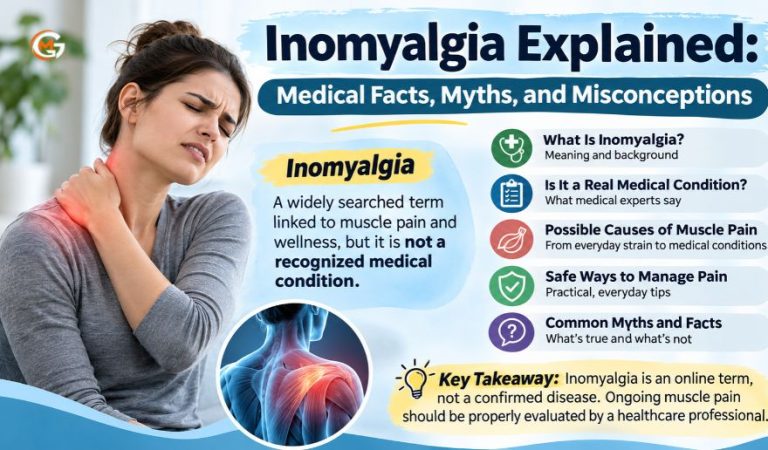
Inomyalgia is a name you may encounter while looking for information about muscle pain, stiffness, or everyday wellness. Because it resembles medical terms such as myalgia and fibromyalgia, it is easy to assume it describes a particular illness.
That assumption deserves a closer look. Inomyalgia is not an established medical diagnosis, and there is no accepted set of symptoms or tests that defines it. The name is also used by a website covering general health topics.
Understanding the difference matters when pain affects your daily life. This guide separates online claims from recognized medical facts and explains when muscle discomfort deserves professional attention.
Quick info: Inomyalgia at a Glance
| Detail | Information |
|---|---|
| Name | Inomyalgia |
| Common context | Online health and wellness content |
| Medical diagnosis | Not established |
| Defined symptoms | No recognized symptom criteria |
| Specific diagnostic test | None established |
| Dedicated treatment | None established |
| Website topic | Everyday health advice |
| Website coverage | Muscle, back, and neck pain |
| Other content | Fitness, nutrition, and stretching |
| Related medical term | Myalgia (muscle pain) |
| Often confused with | Fibromyalgia |
| Other relevant condition | Polymyalgia rheumatica |
| Possible pain causes | Strain, infection, or illness |
| Best next step | Evaluate persistent symptoms |
What Does Inomyalgia Mean?
The word Inomyalgia looks like a medical label, but appearance alone does not give it a clinical meaning. Unlike myalgia, which simply means muscle pain, it has no widely accepted definition in standard medical practice. Some online discussions may use the name when describing unexplained aches or long-lasting discomfort. Others refer to the wellness website carrying the same name. These uses should not be combined into a supposed disease. If you found the term while researching your own symptoms, focus on what you are experiencing rather than assuming the unfamiliar word identifies its cause.
Is Inomyalgia a Recognized Medical Condition?
There is no established diagnosis called Inomyalgia with agreed clinical criteria, a known biological mechanism, or a proven treatment plan. That does not mean the pain someone experiences is imaginary. It means the label cannot reliably tell a doctor what is wrong. Recognized conditions, including fibromyalgia, inflammatory muscle diseases, and injuries, have their own assessment methods. A medical professional looks at the pattern of symptoms and possible underlying causes. Be cautious when an article presents a complete symptom checklist, stages of disease, or a guaranteed cure for Inomyalgia without clearly explaining the evidence behind those claims.
What Does the Inomyalgia Website Offer?
Inomyalgia is also the name of a general wellness website. Its published topic areas include muscle pain, back and neck discomfort, fitness and stretching, nutrition, and healthy living. This kind of material may introduce useful everyday habits, but reading a wellness guide is different from receiving individualized medical care. Advice about movement or diet may not suit someone with a recent injury, severe weakness, or an inflammatory condition. Before following health suggestions from any site, check whether the author is identified, claims are medically supported, and the content explains when readers should seek professional help.
Inomyalgia vs. Myalgia, Fibromyalgia, and Polymyalgia
Myalgia: A Symptom, Not One Disease
Myalgia is the medical word for muscle pain. It may occur after unfamiliar exercise, an injury, an infection, or alongside another illness. The term describes what hurts, not necessarily why it hurts. Treatment depends on the reason for the pain.
Fibromyalgia: A Recognized Chronic Pain Condition
Fibromyalgia causes widespread pain and often involves fatigue, poor sleep, and problems with concentration. Researchers associate it with changes in how the nervous system processes pain. Doctors assess symptoms and exclude other likely causes; there is no single confirming blood test. It should not be renamed Inomyalgia.
Polymyalgia Rheumatica: An Inflammatory Condition
Polymyalgia rheumatica mainly affects adults older than 50. It usually causes notable morning stiffness and pain around the shoulders and hips. Doctors may use examination and blood tests for inflammation during assessment. It differs from ordinary muscle soreness and requires specific medical treatment.
Muscle Pain Symptoms That Deserve Attention
Mast Read: DarlNaija: Exploring Nigerian Music, Lifestyle, and Digital Trends
Muscle discomfort can feel dull, tight, burning, tender, or cramp-like. Some people notice pain in one area after activity; others experience aches across several parts of the body. Stiffness, tiredness, disturbed sleep, or difficulty moving can occur, but none of these creates a unique Inomyalgia symptom pattern. Where the pain occurs, how long it lasts, and what makes it better or worse are more informative than an unfamiliar label. Pain with actual loss of strength is especially important to distinguish from muscles that merely feel sore. New swelling, fever, or joint symptoms may also point to a condition needing assessment.
What Causes Ongoing or Repeated Muscle Aches?
Everyday Strain and Physical Stress
Overuse, heavy lifting, unfamiliar exercise, poor recovery, and sustained awkward positions commonly trigger aches. Stress may increase muscle tension, especially around the neck and shoulders. These problems often improve as the affected area recovers, although repeated strain can keep discomfort returning. Gentle movement and sensible changes to activity may help.
Illnesses, Medicines, and Other Conditions
Muscle aches sometimes accompany viral infections, thyroid problems, inflammatory disorders, or changes in body salts. Certain medicines, including some cholesterol-lowering drugs, may contribute. Fibromyalgia can produce persistent widespread pain without the same tissue injury seen in a muscle tear. Sudden severe pain after extreme exertion can occasionally signal muscle breakdown, called rhabdomyolysis. Because causes vary so widely, lasting or unexplained symptoms should not be given a diagnosis based on a website description.
How Doctors Assess Unexplained Muscle Pain
A clinician usually starts by asking when the pain began, where it occurs, whether it followed exercise or illness, and how it affects sleep and daily activity. They may review medication changes and ask about fever, rashes, numbness, or weakness. Examination helps distinguish muscle tenderness from joint, nerve, or circulation problems. Depending on the findings, tests might check inflammation, thyroid function, electrolyte levels, or muscle damage through creatine kinase. Not everyone needs every test. There is no special test for Inomyalgia; the goal is to find a recognized explanation and avoid unnecessary investigations.
Practical Ways to Manage Mild Muscle Pain
For ordinary soreness after activity, temporarily reduce demanding exercise while maintaining comfortable movement. Rest an injured area initially, and consider a cold pack wrapped in a cloth for recent swelling. Gentle warmth may ease lingering tightness. Gradually returning to walking, stretching, or other tolerable activity can be more useful than staying completely inactive. Stop if movement sharply increases pain.
Sleep, hydration, regular meals, and manageable activity levels support recovery, although none is a universal cure. Over-the-counter pain medicines can help some people, but they have risks and are not suitable for everyone. Check with a pharmacist or clinician if you have other conditions, take medicines, or are unsure what to use. Persistent pain may benefit from physical therapy or a treatment plan tailored to its actual cause.
When Should Muscle Pain Be Checked by a Doctor?
Arrange a medical appointment if pain is unexplained, keeps returning, lasts more than a few days without improvement, or interferes with normal activities. Seek advice sooner for fever, redness, unusual swelling, a new rash, or pain after starting a medication. Get urgent medical help for severe muscle pain with tea-colored urine, marked weakness, or reduced urination, particularly after intense exercise or heat exposure. Breathing or swallowing difficulties and sudden major loss of movement also require emergency assessment. Emergency numbers vary by country; use your local service rather than waiting for an online explanation.
Common Inomyalgia Myths and Misconceptions
A convincing-sounding name does not prove that a disorder exists. One myth is that Inomyalgia has a fixed list of symptoms; another is that it is simply a different name for fibromyalgia. Neither claim is established. It is also misleading to promise that a supplement, stretching routine, or special diet can cure every form of muscle pain. Some everyday measures ease symptoms, but inflammatory disease, infection, and muscle injury may need different care. Be wary of websites offering instant diagnoses, miracle treatments, or dramatic claims without explaining uncertainty. A useful health article should help readers ask better questions, not replace a medical examination.
Final Thoughts
Inomyalgia is best understood as an online name associated with wellness information, not a confirmed medical disorder. If you are dealing with muscle pain, the important questions are where it hurts, how long it has lasted, and whether other symptoms are present. Reliable assessment can identify treatable causes and guide safer relief. Avoid self-diagnosis based on a label that has no established medical meaning.
FAQs
What does Inomyalgia mean?
Inomyalgia is an online name that resembles medical terms related to muscle pain. It is also used by a wellness website. Unlike myalgia, it does not have a standard clinical definition. Its appearance in a health article should not be taken as proof of a separate disease.
Is Inomyalgia a real medical condition?
It is not an established medical diagnosis with accepted criteria. People searching for the term may still have genuine muscle pain that needs attention. A clinician can consider recognized conditions based on symptoms, examination, medical history, and selected tests.
Is Inomyalgia the same as fibromyalgia?
No. Fibromyalgia is a recognized long-term condition involving widespread pain, often with fatigue and sleep difficulties. Inomyalgia has no comparable established diagnostic definition. Someone concerned about fibromyalgia should seek a proper evaluation rather than relying on an unfamiliar online label.
Can Inomyalgia cause chronic muscle pain?
There is no evidence establishing Inomyalgia as a separate cause of chronic pain. Ongoing aches may arise from fibromyalgia, medication effects, inflammatory conditions, or other problems. The underlying cause matters because appropriate care can differ significantly.
What causes muscle pain without an obvious injury?
Possible causes include viral illness, muscle tension, medication effects, thyroid problems, or long-term pain conditions. Sometimes an examination and basic tests are needed to narrow the possibilities. Do not assume unexplained pain automatically means a serious illness.
Is there a medical test for Inomyalgia?
No dedicated test is recognized for Inomyalgia. Depending on your symptoms, a clinician might order tests for inflammation, thyroid disorders, or muscle damage. These investigate established medical possibilities rather than confirm an unrecognized diagnosis.
Can muscle pain improve without medication?
Yes, mild aches related to everyday strain often improve with time, lighter activity, sleep, and gentle movement. However, persistent or worsening pain needs assessment. Self-care should not delay treatment when warning signs or significant weakness appear.
When should unexplained muscle pain become a concern?
Seek medical advice if pain persists, repeatedly returns, or affects daily life. Sudden severe pain accompanied by dark urine, major weakness, breathing problems, or difficulty swallowing needs urgent care. Early assessment can help prevent complications from serious underlying conditions.
For More News and Daily Updates Visit: Gigly Magazine
