

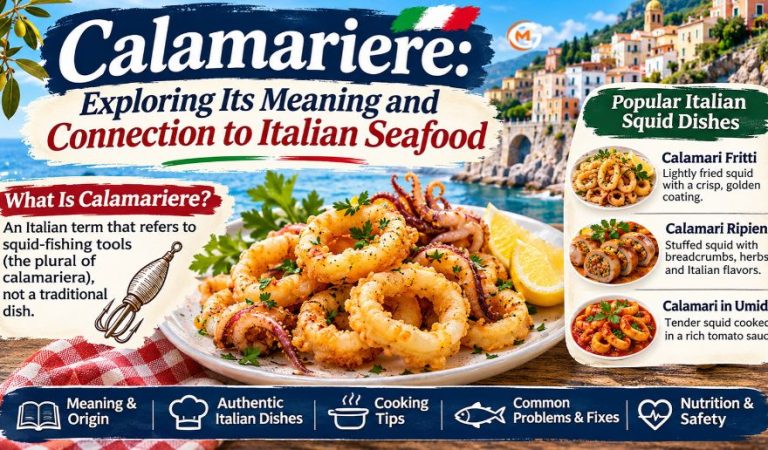
Calamariere resembles calamari, the Italian word for squid seen on menus worldwide. That similarity makes it easy to mistake the term for a seafood dish. Yet the words have different meanings, especially when discussing authentic recipes.
In Italian, calamariere is the plural of calamariera, a squid-fishing tool. It is not an established name for a traditional meal, although some online food articles use it differently.
Understanding the word also leads to Italy’s rich tradition of cooking squid. Here is how the language connects to fishing, classic dishes, and practical ways to prepare calamari at home.
Calamariere Quick Bio
| Detail | Information |
|---|---|
| Term | Calamariere |
| Language | Italian |
| Word form | Feminine plural |
| Singular form | Calamariera |
| Main meaning | Squid-fishing tools |
| Root word | Calamaro |
| Seafood connection | Squid |
| Related fishing term | Fuso |
| Another tool name | Totanara |
| Name of a classic dish? | Not established |
| Italian word for one squid | Calamaro |
| Italian plural for squid | Calamari |
| Seafood category | Cephalopod mollusk |
| Familiar Italian preparation | Calamari fritti |
| Other well-known preparation | Calamari ripieni |
What Does Calamariere Mean?
The clearest meaning of Calamariere comes from Italian fishing vocabulary, not from a cookbook. It is the plural form of calamariera, a squid-fishing implement. Because the word resembles calamari, it is sometimes mistaken for a recipe or seafood style. Those are not established definitions. If you encounter the term in an article about food, look at the surrounding explanation before assuming it names something you can order. The important distinction is between a word associated with catching squid and the everyday Italian word for squid as food.
The Italian Fishing Tool Behind the Name
A calamariera is also known as a fuso, a traditional implement for fishing squid and related cephalopods. Descriptions of the historical tool refer to a small, spindle-shaped wooden body with multiple points at one end. It could be pulled through water from a boat, with bait used to attract the catch. The plural calamariere therefore refers to more than one such tool. Modern squid fishing uses other jigs and equipment too. Fishing rules and permitted gear also differ between coastal areas; anyone planning to fish should check local requirements.
Is Calamariere a Traditional Italian Seafood Dish?
There is no sound basis for treating Calamariere as the standard name of a famous Italian recipe. Unlike calamari fritti or calamari ripieni, it does not identify a recognized cooking method or a set of traditional ingredients. A website might label a squid meal this way, but that does not establish historical roots. If a recipe is titled Calamariere, judge it by its actual ingredients and instructions. Ask whether the squid is fried, stuffed, grilled, or stewed. Those details tell you much more about what will appear on your plate.
Mast Read: Piçada in Portuguese: Meaning, Slang, and Cultural Context
Calamariere, Calamari, and Calamaro: Key Differences
A calamaro is one squid; calamari is its Italian plural. In English-speaking countries, calamari is also the usual menu word for squid prepared as food, especially fried rings. Calamariera and calamariere belong to a separate branch of vocabulary connected to squid fishing. You may also see totano, another Italian name for a squid-like animal used in cooking, or seppia, meaning cuttlefish. These animals are related but are not identical. These distinctions help when following Italian recipes.
Why Squid Is Important in Italian Coastal Cooking
Squid has a natural place in the food traditions of Italy’s coastal communities. It can be cooked quickly over strong heat, slowly in a tomato sauce, or filled with seasoned breadcrumbs and herbs. Its mild flavor makes it a good match for garlic, parsley, olive oil, white wine, and lemon. Some recipes add chili, capers, olives, or vegetables. Not every Italian squid dish is fried, and not every dish uses rings. Cooks also use whole squid, tubes, and tentacles. This range of preparations explains the genuine culinary connection behind the confusion surrounding Calamariere.
Authentic Italian Squid Dishes Worth Trying
Calamari Fritti: Lightly Fried Squid
Calamari fritti is one of the most recognizable squid dishes. Cleaned squid is cut into rings, often alongside the tentacles, lightly coated in flour, and fried until the outside becomes crisp. It is usually served immediately, sometimes with lemon. Good fried calamari should have a delicate coating rather than a thick, heavy crust. The seafood should stay tender, without heavy batter.
Calamari Ripieni: Stuffed Squid
Calamari ripieni uses the squid’s hollow body as a pocket for filling. Recipes vary, but many combine breadcrumbs, chopped tentacles, parsley, garlic, and olive oil. Some add vegetables, cheese, or other seafood. The stuffed squid can be baked or cooked gently in sauce. Avoid packing it too tightly because the body shrinks as it cooks. It makes a substantial seafood meal.
Calamari in Umido: Squid in Sauce
In umido refers to gentle cooking with moisture, often in a flavorful sauce. For squid, that may mean tomatoes, garlic, herbs, and a little wine or water. The result is different from fried calamari: the seafood absorbs the sauce and can be served with bread, rice, or pasta. Times vary with squid size, so follow a tested recipe.
How to Buy and Clean Squid for Home Cooking
Fresh squid should smell clean and mild, not sour or strongly fishy. Look for firm flesh and buy from a seller who keeps seafood properly chilled. Frozen squid is practical where fresh seafood is scarce. It may already be cleaned, saving preparation time. When shopping, keep three checks in mind:
-
Quality: Choose well-chilled seafood with no unpleasant smell.
-
Label: Check whether it is whole, cleaned, or cut into rings.
-
Storage: Keep it cold and follow the package’s use-by guidance.
To clean whole squid, separate the head and tentacles from the body, remove the internal organs and transparent quill, then take out the hard beak from the center of the tentacles. Remove the skin if your recipe calls for it, and rinse briefly with cold water. Pat everything dry before frying or grilling. A fishmonger can do this for you. Thaw frozen squid in the refrigerator, not on the kitchen counter.
How to Cook Calamari Without Making It Tough
Quick Cooking for Frying and Grilling
Squid changes texture quickly over heat. For a fast method, cut it evenly, dry it well, and cook in small batches so the pan or oil stays hot. A brief sear or fry can keep the inside tender while the outside develops color. Crowded pans produce steam instead of browning. Season after cooking if needed, then serve promptly. For grilling, lightly oil the squid and watch it closely; thin pieces can become firm very fast.
Gentle Cooking for Sauces and Stews
The second approach uses a longer, moist cook. Squid that becomes chewy during an intermediate cooking stage can soften with additional gentle simmering, though the exact timing depends on its size. Tomato sauce, garlic, herbs, and a little liquid make a useful base. Keep the heat moderate and check the texture rather than relying only on the clock. Quick cooking suits frying and grilling; gentle simmering suits stews and stuffed squid.
Common Calamari Problems and Easy Fixes
Rubbery calamari is often linked to cooking time. If you are frying, shorten the cooking period and avoid filling the pan. If you are making a stew, give the squid enough time to become tender at a gentle simmer. Soggy fried rings usually mean the seafood was wet, the oil cooled, or the cooked pieces sat too long before serving. Dry the squid carefully, work in small batches, and drain briefly. For bland squid, add lemon, parsley, garlic, or a balanced sauce.
Nutrition, Allergies, and Safe Seafood Handling
Squid provides protein and several nutrients, but its overall nutritional value depends on how it is prepared. Grilled or stewed squid generally contains less added fat than heavily battered, deep-fried versions. Squid is a mollusk, so it can trigger allergic reactions in some people; a person with a known seafood allergy should seek individual medical advice before trying it. Separate raw squid from cooked foods, clean utensils, and cook thoroughly. Refrigerate leftovers promptly. Discard seafood with sour, rancid, or ammonia-like odors, even if you planned to cook it.
Final Thoughts
Calamariere has a real connection to squid, but that connection starts with Italian fishing language rather than the name of a traditional dish. The singular calamariera describes a squid-fishing tool, while calamari is the word commonly used for squid on Italian and international menus. When you want to explore Italian seafood, focus on established preparations such as fried, stuffed, or gently stewed squid. Good ingredients and careful cooking offer an authentic introduction to Italian seafood.
FAQs
What does Calamariere mean in English?
Calamariere is the plural of the Italian word calamariera, which refers to a squid-fishing tool. It is not a direct translation of squid as food. The usual Italian plural for squid is calamari.
Is Calamariere an authentic Italian seafood recipe?
It is not established as the name of a traditional Italian recipe. An online recipe might use the label creatively. Check its ingredients and cooking steps to learn whether it resembles a recognized squid dish.
What is the difference between Calamariere and calamari?
Calamariere relates to implements for catching squid. Calamari means squid in Italian and is also used in English for cooked squid, particularly fried rings. The similar spelling does not make the terms interchangeable.
What is a calamariera used for?
A calamariera is a fishing implement associated with catching squid. Traditional descriptions also call it a fuso. The design belongs to fishing vocabulary, not kitchen equipment for cleaning, cutting, or frying seafood.
Which Italian calamari dishes should beginners try?
Start with calamari fritti for a crisp, simple dish. If you prefer a complete meal, try calamari ripieni, or stuffed squid. Calamari in umido offers a softer, saucier alternative.
Why does calamari sometimes become rubbery?
Squid can become tough when its cooking time does not suit the method. Use a short, hot cook for frying or grilling, or a longer, gentle simmer for dishes made with sauce.
Can I use frozen squid in Italian recipes?
Yes. Frozen squid works for fried, grilled, stuffed, and stewed dishes. Thaw it safely in the refrigerator and drain and dry it thoroughly, especially before frying. Follow the package instructions when provided.
Is calamari safe for people with shellfish allergies?
Not necessarily. Squid is a mollusk and can cause serious allergic reactions. Allergies to crustaceans and mollusks are not identical, so do not assume it is safe. Ask a qualified allergy specialist for advice.
For More News and Daily Updates Visit: Gigly Magazine
