

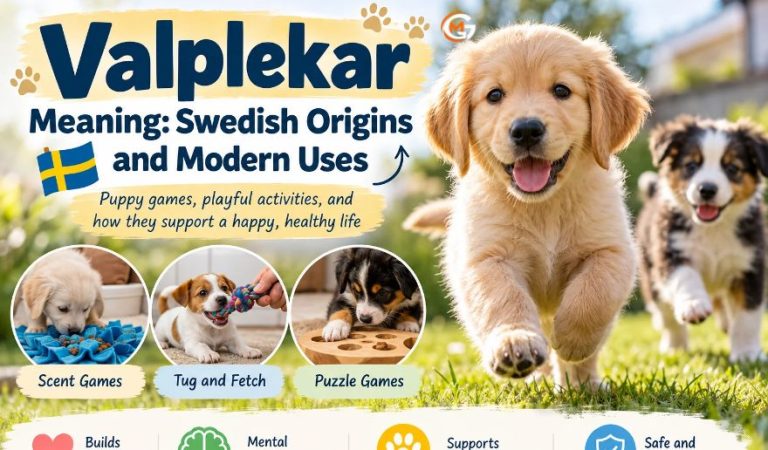
Valplekar is a Swedish term for puppy games and playful activities. It is not a special dog-training system. It covers enjoyable ways for young dogs to move, explore, and interact with people or other dogs. A few simple activities can fit naturally into a puppy’s daily routine.
A puppy learns about everyday objects, social signals, and its own growing body through safe, positive experiences. The right game can also help an owner understand what makes their dog comfortable and curious.
This guide covers the meaning, modern uses, and suitable activities. You will also learn how to spot relaxed play, choose safe toys, and handle common problems without making play stressful.
Valplekar at a Glance
| Detail | Information |
|---|---|
| Term | Valplekar |
| Language | Swedish |
| English meaning | Puppy games or puppy play |
| Valp | Puppy |
| Lek | Play or game |
| Lekar | Games; plural of lek |
| Main subject | Activities for young dogs |
| Typical setting | Home, yard, or safe outdoor space |
| Common examples | Scent games, tug, searching |
| Equipment needed | Suitable toys or food rewards |
| Main aim | Enjoyable, age-appropriate activity |
| Useful for | Enrichment, bonding, simple learning |
| Key requirement | Supervision and regular breaks |
| Formal training system? | No established system by this name |
What Does Valplekar Mean?
The clearest English translation of Valplekar is “puppy games.” It refers to playful activities involving young dogs, not one fixed game with rules that every owner must follow. Searching for toys, gentle tug, and name games all fit. The word describes the activity rather than promising a certain result. The distinction helps avoid invented claims about its history. Although the wording may be new to international readers, the underlying activities are familiar to many dog owners.
Swedish Origins and the Words Behind Valplekar
The term combines valp, the Swedish word for puppy, with lekar, the plural form of lek, meaning games or play. The combined meaning follows naturally. Swedish pet-care pages use Valplekar when discussing games, puzzles, and activities for puppies. That is evidence of present-day usage, but it does not establish an ancient custom or a precise date when the compound first appeared. The history of each word is not the history of the compound. For an English reader, “puppy games” is usually the most useful translation.
How Valplekar Is Used in Modern Puppy Care
Today, the expression covers everyday activities that owners can adjust to a dog’s needs. Swedish puppy advice uses it for ideas such as finding treats, exploring toys, and playing together. English speakers may call this enrichment or interactive play. No Swedish knowledge or special equipment is needed to try them. The aim is choice, not a rigid program. A short search game in an apartment can be just as relevant as outdoor play in a yard or garden. The activity can change as the puppy grows more confident.
Mast Read: Florncelol: A Complete Guide to Its Meaning and History
Why Puppy Play Matters for Healthy Development
Appropriate play gives puppies chances to practice movement, investigate smells, and learn how their actions affect the world. Gentle games support coordination, engagement, and bonding. Games involving familiar, well-matched dogs may also provide social learning, provided both animals are comfortable. Play cannot guarantee good behavior or replace training. Rest, nutrition, veterinary care, and calm everyday experiences matter just as much. The best activity is one the puppy willingly enjoys without becoming overwhelmed. Mental games can also be helpful when energetic outdoor exercise is not yet suitable.
Best Valplekar Games to Try at Home
Scent Games and Hide-and-Seek
Begin by placing a few pieces of your puppy’s normal food in easy-to-find spots on a clean floor. Let the puppy sniff them out and praise its effort. You can also hide briefly behind a nearby doorway and call its name, rewarding it when it finds you. Start with easy hiding places. Scent games stimulate puppies without much running.
Gentle Tug and Short Fetch
Offer a soft, correctly sized tug toy and let the puppy choose whether to grip it. Tug slowly without lifting the puppy or jerking its mouth. For fetch, roll or toss a suitable toy a short distance across a nonslip surface. Reward returns; never chase the puppy. Avoid repeated leaps, hard turns, and long throwing sessions, which can strain growing joints.
Puzzle Feeders and Name Games
A simple food puzzle or snuffle mat can turn part of a meal into a calm search. Choose a beginner-level design and watch closely so the puppy does not chew off or swallow pieces. For a name game, say the puppy’s name once and reward a glance toward you. Repeat only while it remains interested. Both games build attention and encourage problem-solving.
How to Start a Safe Puppy Play Session
Choose a quiet area, remove cables and small objects, and put down a nonslip mat if needed. Prepare a toy and small rewards from its daily food allowance. Invite the puppy to join rather than pushing a toy toward its face. Begin with an easy task, praise small successes, and pause while the puppy is still comfortable. A brief game followed by water, a toilet break if needed, and undisturbed rest is better than forcing a set number of minutes. Increase difficulty gradually. If your puppy looks confused, return to the simpler version and reward its effort.
Choosing Games for Your Puppy’s Age and Personality
A tiny or timid puppy may prefer sniffing, soft toys, and slow movement. A more confident puppy might enjoy a little tug or retrieving on level ground. Size, breed, health, and teething affect safe choices. Large-breed puppies, in particular, can have a long period of physical growth, making repeated high-impact games a poor choice. Let interest guide the activity, but do not assume excitement means the body can handle unlimited exercise. Ask a veterinarian about play if your puppy is limping or unwell.
How to Read Your Puppy’s Play Signals
Relaxed movement, voluntary returns to the game, and a loose, wiggly body often suggest enjoyment. A puppy that repeatedly walks away, freezes, hides, stiffens, or tries to escape may need space. Lip licking or turning away may also signal discomfort; consider the full situation. During dog-to-dog play, look for pauses and a fair exchange of roles instead of one dog constantly chasing or pinning the other. Stop early when play becomes one-sided or intense. A pause lets both dogs decide whether they want to return to the game.
Common Puppy Play Problems and Simple Solutions
Mouthing and nipping are common in young dogs, especially when excitement rises. If teeth touch skin, calmly stop moving, pause attention, and redirect the puppy to a suitable toy when it settles. Avoid shouting, rough wrestling, or turning your hands into toys. For lost interest, simplify the game or change toys. Sudden frantic behavior may mean it is overtired rather than under-exercised. Offer quiet rest. If a problem appears repeatedly, note what happened just before it, including the type and length of play. Persistent fear, guarding, or painful biting deserves guidance from a qualified professional.
Safety Rules and the Limits of Puppy Games
Supervise play and check toys for loose seams, small parts, and damaged material. Choose objects too large to swallow but easy for your puppy to carry safely. Avoid slippery floors, forced jumps, and rough games with children. For playdates, check temperament, health, vaccinations, and breaks. Ask your veterinarian about safe public exposure before your puppy finishes its vaccinations; positive social experiences can still happen in controlled settings. No universal playtime formula fits all puppies. Watch the individual puppy, allow plenty of rest, and never use games as a substitute for medical care. Replace damaged toys immediately, even if they were once labeled puppy-safe.
Valplekar vs. Training: What Is the Difference?
Free play lets a puppy explore and make choices, while training teaches specific skills through planned rewards and clear cues. Calling a puppy during hide-and-seek can help practice coming when called, and exchanging a toy for food can introduce “drop it.” Neither makes Valplekar a certified method. For puppies that dislike fast games, try food searches, safe chew toys, gentle exploration, or a relaxed sniff walk when outdoor access is appropriate. Choose what suits the dog.
Final Thoughts
Valplekar has a straightforward Swedish meaning: games and playful activities for puppies. Its modern value is practical, not mysterious. Simple scent searches, gentle toy games, and short learning activities can make daily care more engaging when they are adapted to the individual dog. Keep sessions positive, notice when your puppy needs a break, and balance activity with sleep and quiet time. A happy puppy needs safe exploration, not endless entertainment.
FAQs
What does Valplekar mean in English?
Valplekar means “puppy games” or “puppy play.” It is a Swedish expression that can describe many activities for young dogs, from finding hidden food to playing gently with toys. It is not the name of one particular game.
Is Valplekar a traditional Swedish puppy game?
There is evidence of the term in Swedish pet-care writing, but not of one historic game with fixed rules. It is more accurate to treat it as a general description of games for puppies than as an established tradition.
Is Valplekar an official dog-training method?
No recognized training program or certification is established under that name. Some puppy games can support attention, recall, and positive handling, but they complement rather than replace reward-based teaching and appropriate socialization.
What are the best games for a young puppy?
Easy scent searches, finding an owner nearby, gentle tug, and simple food puzzles are good starting points. Choose games that fit your puppy’s size and confidence, and keep tasks easy enough to end on a positive experience.
Can puppy games be played indoors?
Yes. A small, puppy-proofed room is enough for food searches, short toy games, and name practice. Clear away hazards and use a nonslip surface. Indoor play is especially useful when the weather or vaccination precautions limit outdoor activities.
How long should a puppy play session last?
There is no single safe time limit for all puppies. Start with a few minutes of easy activity, pause often, and stop when the puppy becomes tired or disengaged. Age, breed, health, and game intensity matter more than a fixed clock rule.
Can puppies play safely with older dogs?
They can when the older dog is healthy, gentle, comfortable around puppies, and properly supervised. Watch both dogs for loose body language and voluntary breaks. Separate them if either seems tense, overwhelmed, or unable to move away freely.
What should I do if my puppy bites during play?
Pause the game calmly when teeth touch skin, then offer a safe toy once your puppy settles. Avoid hitting, shouting, or pulling your hands away in a way that encourages chasing. Check whether your puppy needs sleep or a quieter activity.
For More News and Daily Updates Visit: Gigly Magazine
