
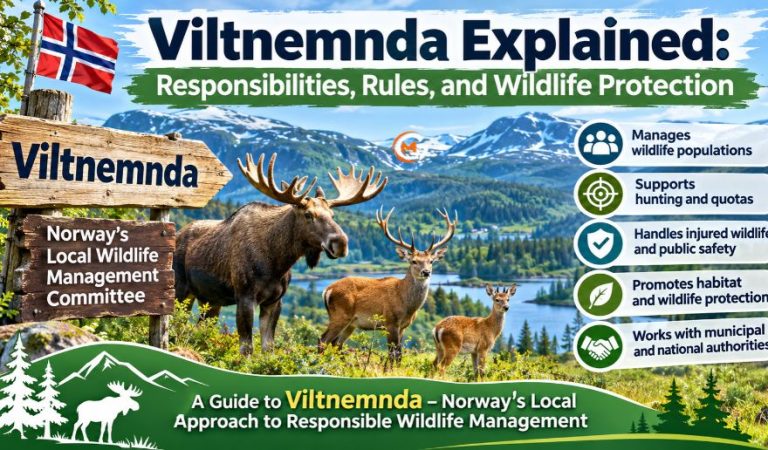
Norway is known for its forests, mountains, and rich wildlife. Managing these natural resources requires clear rules and local cooperation. Viltnemnda is a Norwegian term used for a wildlife management committee that helps municipalities handle matters involving wild animals, hunting, and public safety.
These committees can support local wildlife management, monitor animal populations, and help address conflicts between people and nature. Their responsibilities depend on how each municipality organizes its wildlife services.
Understanding Viltnemnda is useful for hunters, residents, landowners, and visitors. This guide explains its meaning, responsibilities, legal framework, wildlife protection activities, and the correct steps to take when wildlife problems occur.
Quick info: Viltnemnda Overview
| Detail | Information |
|---|---|
| Name | Viltnemnda |
| English Meaning | Wildlife Management Committee |
| Country | Norway |
| Organization Type | Municipal committee |
| Main Purpose | Local wildlife management |
| Primary Focus | Wildlife and public safety |
| Wildlife Species | Moose, deer, roe deer, and others |
| Key Activities | Hunting and wildlife management |
| Administrative Level | Local municipality |
| Committee Members | Locally appointed members |
| Hunting Responsibilities | Planning and local decisions |
| Wildlife Emergencies | Coordination with relevant services |
| Legal Framework | Norwegian wildlife legislation |
| Public Contact | Municipal wildlife office |
What Does Viltnemnda Mean?
The Norwegian word vilt means wildlife or game, while nemnd refers to a committee or board. Viltnemnda therefore describes a group involved in local decisions about wild animals. It is not the name of a nationwide charity, private company, or single government department.
Historically, Norway had state-appointed wildlife committees at the municipal level. In 1993, responsibility for local wildlife management moved to municipalities. Some continued using dedicated committees, while others assigned the work to municipal staff or different political bodies. This distinction matters when trying to understand who has authority today.
Store norske leksikon+1
How Local Wildlife Committees Work
Appointments and Decision-Making
Where a municipality has an elected Viltnemnda, the municipal council normally appoints its members under local rules. Members may bring experience in hunting, farming, conservation, or community affairs. Administrative employees can prepare case documents and help implement decisions.
A committee can discuss population goals, consider local concerns, or make decisions when authority has been delegated to it. However, it cannot simply create new hunting rights or ignore national legislation. Municipalities without a separate committee still carry out the duties assigned to them by law.
Main Responsibilities of Viltnemnda
Managing Wildlife Populations
Local wildlife management aims to keep populations healthy while reducing avoidable harm. Relevant work may include reviewing animal counts, hunting reports, habitat conditions, and damage to farmland or forests. Such information helps a municipality set realistic management goals.
Supporting Public Safety
Some committees also oversee arrangements for injured wildlife, road collisions, and local wildlife concerns. Trained personnel, rather than committee members themselves, usually perform searches or handle injured animals. The exact division of work depends on municipal organization. A committee’s main value is connecting local knowledge with lawful, practical decisions.
Wildlife Laws and Regulations in Norway
Mast Read: ABS Testauslösung: A Complete Guide to Testing and Safety
Norway’s Wildlife Resources Act, known as viltressursloven, took effect on July 1, 2026. It replaced the Wildlife Act of 1981 and sets rules for hunting, capture, and killing of wild animals. Its approach emphasizes responsible and sustainable use within other applicable laws.
The Nature Diversity Act also shapes wildlife decisions. It addresses biodiversity and the protection of species and natural habitats. Animal welfare rules, hunting regulations, and local rules add further requirements. Some regulations made under the older law continue to apply during the transition.
Regjeringen.no+1
These laws define what public authorities may do. A local committee only has the decision-making powers assigned to it. Hunters, landowners, and residents should check current rules for the species and municipality involved.
Hunting, Deer Quotas, and Local Planning
Moose, Red Deer, and Roe Deer
Norwegian municipalities play an important part in managing moose, red deer, and roe deer. They can set population objectives, establish minimum hunting-area requirements, approve hunting areas, and issue relevant harvest permits. When a Viltnemnda handles these matters, it acts within the municipality’s delegated authority.
Landbruksdirektoratet+1
Why Hunting Plans Matter
A population plan considers how many animals the landscape can support, local traffic risks, and damage to crops or forests. Hunters and landowners may contribute observations and harvest records. Hunting still requires the necessary rights, registration, and compliance with seasons and other rules. A municipal recommendation is not a substitute for legal permission to hunt.
What to Do After a Wildlife Road Collision
If your vehicle hits a wild animal in Norway, stop where it is safe and protect the accident scene. Turn on hazard lights, wear a reflective vest, and place a warning triangle when it is safe to do so. Check whether anyone needs urgent medical attention.
Report the collision to the police at 02800, even if the animal runs away and appears unharmed. For an immediate threat or serious police emergency, call 112; for urgent medical assistance, call 113. Give an accurate location and describe the animal and direction it traveled.
Do not chase, touch, or attempt to put down a large injured animal yourself. Police can notify the appropriate municipal wildlife personnel or search team. If officials allow you to leave, mark the collision location as instructed so trained trackers can begin their work.
Statens vegvesen+1
Wildlife Protection and Healthy Habitats
Wildlife management does not mean hunting alone. Local decisions can take account of forest conditions, animal movement routes, breeding areas, and the effects of roads or development. Information gathered during population management may help other authorities identify important areas.
Protection also requires balance. Too many deer in a limited area can damage vegetation, while poor habitat or excessive hunting can harm a population. Committees may contribute local knowledge to these discussions, but protected species and conservation areas are governed by wider legal arrangements. Viltnemnda is not the sole authority responsible for endangered animals.
How to Contact Viltnemnda in Norway
For routine questions, start with the official website of the municipality where the animal or property is located. Look for viltforvaltning (wildlife management), viltnemnd, agriculture, or environmental services. If no committee is listed, contact the municipal administration and ask who handles wildlife matters.
Explain the issue clearly, including the location, animal species, date, and any risks to people. A photograph taken from a safe distance may help, but avoid sharing unnecessary personal details. Never delay reporting a road collision while looking for a committee’s direct phone number: contact the police first.
Common Problems and Limits of Local Committees
One frequent misunderstanding is assuming every Norwegian municipality has the same committee structure. Some use a separate Viltnemnda; others rely on staff members or another council body. Public contact details and decision procedures can therefore differ.
Wildlife decisions may also involve competing needs. Farmers worry about damaged crops, drivers need safer roads, hunters want predictable access, and conservation groups focus on ecosystems. Limited budgets and incomplete population data can make choices harder. Local committees must work within national legislation and cannot independently settle every disagreement about wildlife or land use.
Benefits and Tradeoffs of Local Wildlife Management
A local committee can understand conditions that distant agencies might miss. Residents may share knowledge about animal movement, repeated collisions, or changes in forests. Local discussion can make decisions better suited to a particular area and easier for communities to understand.
There are drawbacks as well. Smaller municipalities may have fewer specialists or resources. Strong local interests can disagree about hunting levels or conservation needs. Clear procedures, reliable records, and cooperation with regional and national authorities help prevent decisions from depending too heavily on a single viewpoint.
Viltnemnda and Other Wildlife Authorities
Several organizations share responsibility for Norway’s wildlife. The Norwegian Environment Agency handles important national environmental tasks. The Norwegian Agriculture Agency provides guidance and administration for parts of hunting and game management, while county authorities have specific regional duties.
Regional predator management boards and wild reindeer boards deal with particular species and areas. Police coordinate responses to reported wildlife collisions, and municipal search teams handle many injured-animal cases. Knowing these differences makes it easier to approach the right office instead of assuming Viltnemnda manages every wildlife issue.
Final Thoughts
Viltnemnda reflects Norway’s approach to handling wildlife questions close to the communities they affect. Where these committees exist, they can support responsible hunting, animal welfare, local planning, and public safety. Their powers are not identical across municipalities, and national laws still set the boundaries. For practical help, contact the relevant municipal office; for a wildlife road collision, report it to the police promptly.
FAQs
What does Viltnemnda mean in English?
Viltnemnda generally means “wildlife management committee” or “game committee.” The term describes a local body dealing with wildlife matters in Norway. It does not refer to a single national wildlife organization.
Is Viltnemnda a government organization?
Where it exists, Viltnemnda is part of a municipality’s public administration or political committee structure. It performs local public functions, but its exact powers depend on municipal rules and national legislation.
Does every Norwegian municipality have a Viltnemnda?
No. Local wildlife management is a municipal responsibility, but municipalities can organize the work differently. Some maintain a named committee, while others use municipal departments or other elected bodies.
Who appoints Viltnemnda members?
In municipalities with a politically appointed wildlife committee, the municipal council generally chooses its members. The number of members, their terms, and decision-making powers follow that municipality’s arrangements.
Can Viltnemnda set hunting quotas?
It may prepare recommendations or make certain decisions if authority has been delegated. Municipalities have defined responsibilities for deer management and harvest permits. The committee cannot override national hunting regulations.
What should I do if I hit a wild animal in Norway?
Stop safely, warn other road users, and report the collision to police at 02800. Do not follow an injured animal. Give your location so trained personnel can find it.
Does Viltnemnda protect endangered wildlife?
A committee may provide information or participate in local management discussions, but it does not control all species protection. National environmental laws and other authorities govern many endangered-species decisions.
How can I find my local Viltnemnda?
Check the municipality’s official website for wildlife management or viltforvaltning. If no Viltnemnda appears, ask the municipal office for the responsible wildlife contact. Use the police for collisions.
