

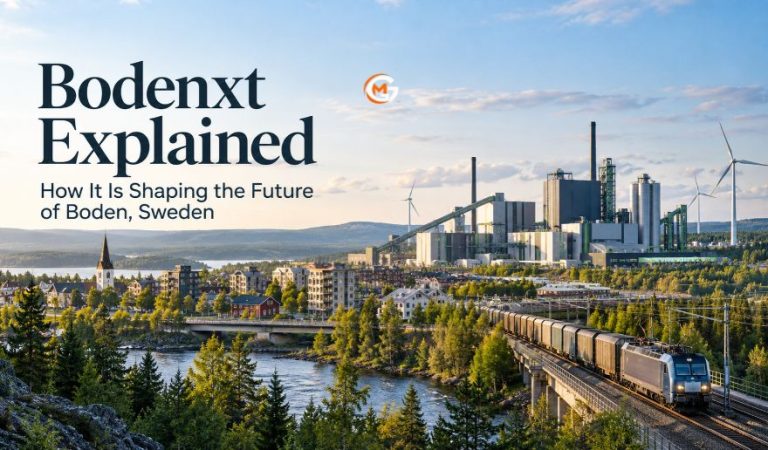
Boden is a small city in northern Sweden facing an unusually large change. New industrial investment is bringing jobs, international attention, and pressure on local services. The challenge is not simply to build factories. It is to help an entire community grow alongside them.
Bodenxt is the municipality’s framework for managing this green transition. It connects industrial expansion with planning for housing, skills, businesses, and infrastructure. Its work matters to people who already live in Boden and to those considering a move there.
Understanding Bodenxt means looking beyond promises about clean technology. This guide explains what the initiative does, how the Stegra steel project fits in, which improvements are already visible, and what obstacles still stand in the way.
Bodenxt Quick Bio
| Detail | Information |
|---|---|
| Name | Bodenxt |
| Initiative type | Municipal development platform |
| Location | Boden, Norrbotten, Sweden |
| Lead public body | Municipality of Boden |
| Main objective | Manage the green societal transition |
| Core work areas | Five coordinated areas |
| Workforce focus | Skills and recruitment |
| Community focus | Housing and quality of life |
| Business focus | Local growth and new investment |
| Infrastructure focus | Transport and utility systems |
| Major industrial catalyst | Stegra steel development |
| Main industrial location | Boden Industrial Park |
| Industrial park area | About 550 hectares |
| Railway milestone | Officially inaugurated June 2026 |
| Current stage | Ongoing development and planning |
What Is Bodenxt and How Does It Work?
Bodenxt is the Municipality of Boden’s platform for coordinating rapid social and economic change. It is not a commercial app, a private steel company, or a single construction project. The municipality uses the initiative to connect decisions about employment, new homes, business conditions, and public works. That matters because a major factory cannot succeed in isolation: workers need places to live, employers need trained people, and neighborhoods need services capable of handling growth.
The Five Main Areas of Bodenxt’s Development Plan
Skills and Workforce Supply
Industrial expansion calls for engineers, process operators, electricians, technicians, and people in many supporting roles. Bodenxt treats recruitment and skills training as a community-wide task rather than leaving every employer to solve shortages alone. Schools, training providers, companies, and public agencies have different parts to play. In January 2026, Boden announced an engineering education initiative aimed at future employment needs, showing how local training can respond to changing demand.
Living and Housing
More jobs do not automatically mean more permanent residents. People need affordable homes, schools, child care, recreation, and a sense of belonging before they can settle. Housing is therefore one of Bodenxt’s central concerns. This work involves both planning new neighborhoods and making better use of existing properties. It also means considering the families and partners who arrive with newly recruited workers, not only the employees themselves.
Business Development
Large industrial projects create demand for services well beyond their own gates. Local firms may find customers in transport, food, maintenance, construction, hospitality, and professional services. Bodenxt’s business focus aims to help companies participate in that growth while encouraging a more varied local economy. The aim is important: if one major investment slows, a community with several active industries and strong small businesses will be better placed to adapt.
Infrastructure Above Ground
Roads, rail links, industrial sites, and public facilities must be able to support increased activity. Bodenxt includes planning for these visible connections, which move people, equipment, and goods through the region. The completed rail link to Boden Industrial Park is a concrete example. Strong transport access can make industrial operations more efficient and reduce dependence on long-distance road freight, although the environmental impact still depends on how transport is operated.
Infrastructure Below Ground
Rapid development also puts pressure on water supplies, sewer systems, power connections, and other less visible networks. These services need capacity long before new homes or factories can operate reliably. In 2026, Boden began expanding its Svedjan wastewater treatment facility to meet rising demands and stricter treatment standards. That work shows why the green transition includes ordinary public utilities, not just high-profile technology or new industrial buildings.
Why Stegra’s Green Steel Project Matters
Stegra, formerly known as H2 Green Steel, is a major force behind Boden’s transformation, but it is separate from Bodenxt. At Boden Industrial Park, Stegra is building a plant designed to use renewable electricity and hydrogen to turn iron ore into iron, then electric furnaces to produce steel. The company aims for much lower emissions than traditional coal-based steelmaking. Those are design goals, not proof of emissions already avoided at full commercial scale; the plant remained under construction in October 2026.
Mast Read: Ronenia: Meaning, Interesting Facts, and Common Questions
Jobs, Training, and Opportunities for New Residents
The opportunity goes beyond specialist steel jobs. An expanding population needs teachers, health workers, shop staff, builders, drivers, and restaurant employees. Stegra has described an ambition to employ around 2,000 people at full scale, but that is a future target, not a count of guaranteed vacancies. Jobseekers should check individual employers’ current listings and required qualifications. International applicants also need to check Swedish work authorization rules, language expectations, and whether a role offers relocation support.
Housing Shortages and Relocation to Boden
Housing is one of the clearest limits on Boden’s growth. In May 2026, the municipality reported that rental vacancies were close to zero. It was working on detailed plans that could allow about 1,300 apartments and 500 detached houses, but zoning capacity is not the same as completed homes. Construction costs and financing remain barriers. Anyone planning to move should secure suitable housing before accepting a start date and should separately confirm school places, commuting options, and local registration requirements.
Rail, Water, and the Infrastructure Behind Growth
One visible success is the six-kilometer railway serving Boden Industrial Park. Finished in late 2025 and officially inaugurated on June 9, 2026, it connects the site with the wider rail network. The project included nine bridges and was delivered ahead of its planned schedule. Freight links matter because steel production requires large volumes of incoming materials and outgoing products. Meanwhile, expanded wastewater capacity and reliable utilities are essential for the wider population, not just industrial customers.
How Local Businesses May Benefit From the Green Transition
A successful industrial district can create a network of suppliers rather than one isolated employer. Restaurants and other service providers have already reported opportunities linked to activity at the industrial park. Boden is also exploring circular business models, where heat, materials, or other by-products from one operation might support another. These possibilities are promising but should be judged project by project. A proposed use for waste heat, for example, is not the same as a working commercial system.
How to Find Bodenxt Updates and Practical Support
For readers seeking practical information, start with the Boden Municipality website’s Bodenxt pages and project news. They explain municipal plans, completed milestones, and topics such as housing and skills. Check employers directly for applications, and use the municipality’s regular services for permits, housing guidance, and relocation questions. Some processes may require Swedish-language forms. If an announcement is old, confirm its date and whether a project is proposed, approved, funded, under construction, or already operating.
Benefits, Risks, and Real Limits of the Initiative
Bodenxt’s main strength is its broad view: industrial investment, skills, housing, and infrastructure are treated as connected problems. Possible benefits include new careers, business demand, stronger transport links, and cleaner industrial methods. Yet those gains are uneven and not automatic. Low rental availability affects existing residents as well as newcomers, and public services face pressure during rapid growth. Climate claims also need measured results, including the impacts of electricity use, land development, and supply chains.
Latest Developments and What Comes Next
Progress has been mixed in 2026. Boden opened the industrial railway and advanced plans for a Sustainability Center intended to bring groups together around community development. Stegra completed a €1.4 billion financing round in June, but in September said further capital was needed to finish its plant. Construction continued, including electric furnace installation reported in October. A fatal incident at the construction site that month also highlighted the importance of worker safety; its circumstances were under investigation. The next test is turning construction progress into safe, lasting operations and livable growth.
Final Thoughts
Bodenxt offers a practical way to think about the future of Boden, Sweden. Its purpose is wider than one steel plant: the municipality is trying to make jobs, homes, transport, and services develop together. Some projects, including the railway, are complete; other outcomes depend on funding, construction, and public planning. The initiative’s real value will be measured by whether the benefits reach residents and remain useful over time.
(FAQs)
What is Bodenxt in Sweden?
Bodenxt is a development platform run by the Municipality of Boden. It coordinates planning linked to green industry, local jobs, housing, business growth, and infrastructure. It is not a private company or consumer application.
Why was Bodenxt created?
It was created to manage the rapid changes associated with major industrial investment. The goal is to help Boden meet new demand for workers, homes, services, and transport while supporting long-term community development.
Is Bodenxt the same as Stegra?
No. Stegra is the company constructing a hydrogen-based steel plant in Boden. Bodenxt is the municipality’s broader development platform, which addresses the effects of that investment and other changes across the community.
What are Bodenxt’s five main focus areas?
They are workforce skills, living and housing, business development, above-ground infrastructure, and below-ground infrastructure. Together, they cover the practical conditions needed for industrial expansion and everyday life in a growing municipality.
Can international workers find jobs through Bodenxt?
Bodenxt shares information about regional growth, but it is not a guaranteed job-placement service. Applicants should use employers’ recruitment pages and verify qualifications, language expectations, work permits, and housing before relocating.
Is the railway to Boden Industrial Park finished?
Yes. The industrial railway was completed in 2025 and officially inaugurated in June 2026. It connects the industrial area to the wider rail system and supports heavy freight movements.
What challenges does Boden currently face?
The main concerns include scarce rental housing, rising construction costs, pressure on public services, and shortages of suitable skills. Stegra’s need for additional funding also creates uncertainty around the pace of industrial development.
How can I follow Bodenxt’s latest projects?
Use the Municipality of Boden’s Bodenxt news pages for local developments and public planning updates. For company-specific construction or hiring news, check the relevant business directly and pay attention to publication dates.
For More News and Daily Updates Visit: Gigly Magazine
