

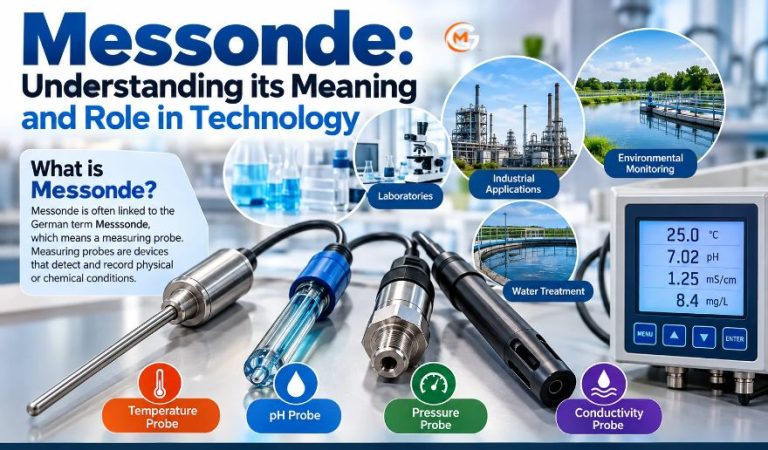
Messonde is a term readers may encounter while looking for information about sensors, measurement devices, or technical equipment. Its meaning is not as clear as some online explanations suggest. In a technical setting, it is often associated with the German word Messsonde, which means measuring probe.
Measuring probes help people collect information about temperature, pressure, water quality, and other conditions. They are used in laboratories, factories, environmental studies, and many everyday systems. However, these instruments do not all use the same technology or deliver the same results.
This guide explains the spelling difference, how measurement probes operate, and what makes them useful. It also covers common types, buying considerations, maintenance, and problems that can affect accuracy.
Quick info: Messonde at a Glance
| Detail | Information |
|---|---|
| Term | Messonde |
| Established related term | Messsonde |
| Language of related term | German |
| English translation | Measuring probe |
| Standard product named Messonde | Not independently established |
| Main technical field | Measurement and sensing |
| Basic purpose | Detect a measurable condition |
| Possible measurements | Temperature, pH, pressure, and more |
| Sensing method | Depends on probe design |
| Typical connection | Meter, controller, or data logger |
| Data output | Analog or digital, model-dependent |
| Calibration | Required or checked as specified |
| Typical settings | Labs, industry, and fieldwork |
| Key selection factor | Fit for the intended measurement |
| Main limitation | No universal specifications |
What Does Messonde Mean in Technology?
The clearest technical connection is to Messsonde, a recognized German word for a measuring probe. The spelling Messonde lacks one firmly established engineering definition. It may be a shortened spelling, a typing error, or a name used in a different context. For equipment research, the surrounding description matters more than the word alone.
A measuring probe is an instrument or part of an instrument that detects a specific physical or chemical property. It might test the temperature of a liquid or measure the acidity of water. That does not mean a universal device called Messonde can perform every task. If a page describes one branded system, look for the manufacturer, model number, and documented specifications before treating its claims as fact.
How Do Measuring Probes Work?
Most probes contain a sensing element that responds to a change in the property being measured. The response may be electrical, optical, or another detectable signal. A connected meter or controller interprets that signal and presents a useful reading. Some probes include electronics inside the housing; others rely on external equipment.
Consider a temperature probe. A resistance-based sensor changes electrical resistance as its temperature changes, while a thermocouple produces a small voltage related to the temperature difference between its junctions. A compatible instrument converts that response into a reading. This example shows why the sensing method, signal processing, and measurement conditions all matter. Two probes can measure temperature but need different equipment.
Common Types of Measuring Probes
Temperature Probes
Temperature probes appear in food processing, heating systems, laboratories, and industrial machines. Thermocouples, resistance temperature detectors (RTDs), and thermistors are common sensor types. They differ in operating range, response, accuracy, and cost. A probe suitable for a freezer may not survive a hot industrial furnace.
pH, Conductivity, and Oxygen Probes
Water-quality instruments can measure acidity, electrical conductivity, or dissolved oxygen. Each property requires a suitable sensor and measurement method. A pH electrode, for instance, is not interchangeable with a conductivity probe. Some multi-parameter instruments combine several sensors in one field-ready unit, but each sensor still needs appropriate care.
Pressure and Level Probes
Pressure sensors help monitor pipes, vessels, and equipment. Level probes may track the amount of liquid in a tank or the depth of water. Designs vary, so the correct choice depends on the medium, operating pressure, installation location, and expected measurement range.
Important Features to Compare
Range, Accuracy, and Response Time
A probe’s range tells you the conditions it is designed to measure. Accuracy describes how close its reading is expected to be to the true value under stated conditions. Resolution indicates the smallest change it can display or report. Response time is important when conditions change quickly. These specifications are related, but they do not mean the same thing.
Materials, Connections, and Data Handling
The probe body must tolerate its surroundings. Moisture, chemicals, vibration, and high heat can damage an unsuitable model. Check cable length, connector type, power requirements, and compatibility with the receiving instrument. Some systems provide digital outputs or store measurements through data loggers. Those features belong to particular products, not to every device associated with Messonde.
Where Are Measuring Probes Used?
Industrial teams use probes to monitor production temperatures, equipment pressure, and process conditions. Food manufacturers may use calibrated temperature sensors to check heating or cooling steps. In laboratories, researchers measure pH, temperature, and other properties to keep experiments consistent. Reliable readings help teams notice changes and document results.
Environmental work is another major application. Water-quality monitoring can include temperature, conductivity, dissolved oxygen, and pH readings collected at a site or over time. Building systems may use sensors to manage heating and ventilation. In each setting, the value comes from selecting the right measurement method and interpreting the readings correctly, not from the probe name alone.
What Do You Need Before Using a Probe?
Mast Read: Calamariere: Exploring Its Meaning and Connection to Italian Seafood
Start with a clear measurement goal: what property must you test, over what range, and how accurate must the result be? Then check the instrument’s compatible sensor types and electrical connections. Some probes operate with a handheld meter; others connect to industrial controllers or automated logging equipment. A probe without the right readout may be unusable.
You may also need reference standards or calibration solutions, mounting hardware, protective fittings, and suitable cleaning supplies. Check whether the equipment is rated for water, chemicals, outdoor weather, or hazardous locations. Follow the maker’s operating limits rather than assuming a probe is safe wherever it physically fits.
How to Use and Maintain a Measuring Probe
For reliable results, follow the manual for the specific model. A basic workflow usually looks like this:
- Inspect the sensor, cable, and connector for damage.
- Check calibration or verify readings against an appropriate reference.
- Place the sensing area correctly and allow readings to stabilize.
- Record the value, units, conditions, and any unusual observations.
After use, clean and store the probe as instructed. Storage rules vary: for example, many pH electrodes need a suitable storage solution and should not be left dry. Avoid touching delicate sensing surfaces, pulling cables, or using cleaning chemicals that could damage the materials. Regular checks help reveal changes before they affect important decisions.
Benefits and Limitations of Probe-Based Measurement
A well-chosen probe makes it possible to measure conditions directly where they occur. It may support frequent checks, continuous monitoring, quicker troubleshooting, or automatic control. Portable instruments are useful for field visits, while fixed sensors can provide readings without repeated manual sampling. These benefits depend on the complete measuring system.
There are limits. Sensors can drift, become contaminated, respond slowly, or fail outside their rated conditions. Installation can also affect results. For example, poor contact may distort a temperature reading, while bubbles can disturb certain water-quality measurements. A digital display does not guarantee that the data is accurate. Maintenance and independent checks remain important.
Common Problems and Practical Fixes
Unstable or Unexpected Readings
Check whether the probe is positioned correctly and has had enough time to adjust to the sample. Look for trapped air, residue, damage, or rapidly changing conditions. Compare the result with a known reference where appropriate.
Missing Signals or Connection Errors
Inspect plugs, cables, power, and instrument settings. Confirm that the meter supports the probe’s signal type. If a sensor is damaged or wiring appears unsafe, stop using it and seek qualified help rather than attempting a risky repair.
Calibration and Sensor Wear
If calibration fails repeatedly, follow the approved cleaning and troubleshooting procedure. Some sensing elements have limited service lives and eventually need replacement. Keep calibration records so gradual changes are easier to recognize.
Alternatives to Separate Measuring Probes
A handheld meter with a built-in sensor may be easier for occasional checks. Some tasks can use non-contact instruments, such as infrared thermometers, when the target and conditions are suitable. Laboratory instruments may offer more controlled measurements, while permanent monitoring systems can log readings automatically.
These are not universal substitutes. An infrared thermometer measures surface temperature rather than the inside of a liquid, for example. Choose an alternative by comparing what it actually measures, its accuracy, the environment, and its operating costs.
Final Thoughts
Messonde should not be mistaken for one proven, all-purpose technology. Its most useful technical connection is to the German word Messsonde, meaning measuring probe. Real measuring probes support work across science, industry, and environmental monitoring. The best results come from checking the exact device specifications, using a compatible instrument, and caring for the sensor properly.
Frequently Asked Questions (FAQs)
What Does Messonde Mean?
In technical discussions, Messonde is commonly linked to the German word Messsonde, which means measuring probe. The shorter spelling does not have a single established technical definition, so context is important.
Is Messonde a Specific Product or Brand?
There is no verified universal device or product standard under that name. A company or website may use the word independently. Check the actual manufacturer and product documentation before making assumptions.
Is Messonde the Same as a Sensor?
Not exactly. A sensor is the element that detects a change. A probe may contain that element along with a housing, protective parts, wiring, and sometimes electronics.
What Can a Measuring Probe Detect?
Depending on its design, a probe can measure temperature, pH, conductivity, pressure, oxygen, or liquid level. No single probe automatically measures all these properties.
Do Measuring Probes Always Need Calibration?
Calibration needs differ by sensor and application. Some require frequent adjustment against standards; others need scheduled checks or factory servicing. Follow the manufacturer and your measurement quality requirements.
Can Measuring Probes Connect to Computers?
Yes, when the complete system supports it. Compatible meters, controllers, or data loggers may send readings to computers or software. A basic probe often cannot connect directly without an interface.
Are Measuring Probes Safe to Use Outdoors?
Only when their specifications suit the environment. Look for suitable weather protection, temperature limits, and chemical resistance. Electrical and hazardous-area requirements may call for specially rated equipment.
How Do I Choose the Right Measuring Probe?
Identify the property, expected range, required accuracy, operating environment, and available readout. Compare these needs with manufacturer specifications, then consider calibration supplies, maintenance, and replacement cost.
For More News and Daily Updates Visit: Gigly Magazine
