

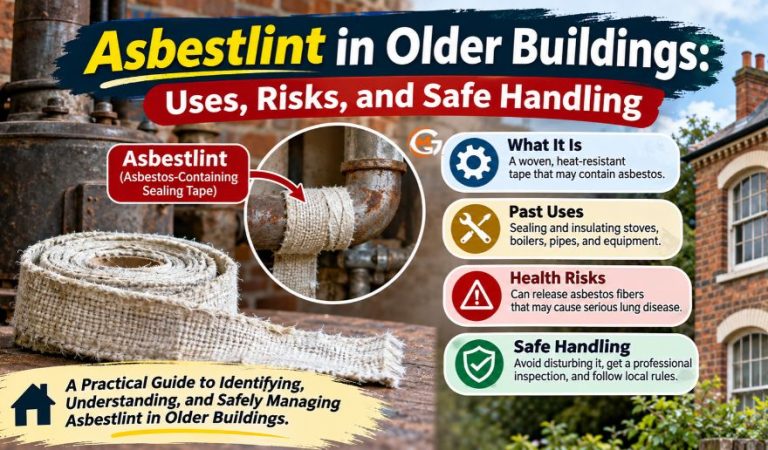
An old stove seal, boiler gasket, or strip of fabric around a hot pipe may look harmless. In older buildings, however, some of these materials were made with asbestos. One term used for such products is Asbestlint, especially in Dutch-language building records.
These materials were valued for resisting heat and helping equipment operate safely. Their purpose was practical, but the asbestos fibers they contain can cause serious disease if released into the air and inhaled. Not every old seal or woven tape contains asbestos.
Knowing where these materials may appear helps you avoid accidental damage. This guide explains their original uses, warning signs, professional testing, health concerns, and the safest decisions to make before repairs or renovation.
Quick info : Asbestlint at a Glance
| Detail | Information |
|---|---|
| Common meaning | Asbestos-containing woven tape or ribbon |
| Related materials | Asbestos rope, cord, and gaskets |
| Main historical purpose | Heat-resistant sealing and insulation |
| Typical locations | Stoves, boilers, ovens, pipe joints |
| Common appearance | Woven, pale, gray, or aged fabric |
| Can color confirm asbestos? | No |
| Main hazard | Inhaled airborne asbestos fibers |
| Greater concern | Frayed, broken, or disturbed material |
| Safe identification | Qualified inspection and laboratory testing |
| Safe first action | Stop work and avoid touching it |
| Leave in place? | Sometimes, after professional assessment |
| Removal | By suitably qualified workers |
| Disposal | Controlled asbestos waste procedures |
| Modern replacements | Appropriate asbestos-free heat-resistant seals |
What Is Asbestlint?
Asbestlint is a term sometimes used for narrow woven material containing asbestos. In older heating and industrial equipment, it could serve as a flexible seal, wrapping, or heat barrier. It is closely related to asbestos cord and rope, but the shapes and uses vary. The term is not a precise international product category, so an old label alone cannot identify its fiber content. Also, the plastic warning tape used today to mark an asbestos work area is not the same as an asbestos-containing sealing tape. The two should not be confused.
Why Was Asbestos Tape Used in the Past?
Asbestos is a group of naturally occurring minerals whose fibers resist heat and wear. Manufacturers once wove the fibers into fabrics, tapes, and cords or combined them with other ingredients to make seals. Such products could withstand temperatures that damaged ordinary textiles and could help close gaps around hot equipment. They were relatively inexpensive and available. Those benefits explain their historical popularity, but they do not outweigh the dangers now known to be associated with breathing asbestos fibers. Many countries have since restricted or banned asbestos products.
Where Might It Be Found in an Older Building?
Stoves, Fireplaces, and Boilers
Older stoves and heating appliances may contain woven sealing strips around doors, viewing windows, or flue connections. Similar rope-like products were used around oven doors and boiler components. A seal may be hidden beneath a metal frame or compressed between parts, making it difficult to notice during an ordinary inspection. Age increases suspicion, but the age of the appliance and its replacement parts may differ.
Pipework, Electrical Equipment, and Plant Rooms
Asbestos textiles were also used around hot pipes, at some pipe joints, and in industrial machinery. Certain old fuse boxes and electrical switches contained asbestos string or protective fabric for heat resistance. Building owners should not assume that every insulated pipe contains asbestos tape: pipe lagging, woven wraps, and compressed gaskets are different materials, each requiring its own assessment. Hidden seals become especially important when equipment is opened for maintenance.
Can You Identify Asbestlint by Looking at It?
A suspect strip may appear white, dirty gray, fibrous, or tightly woven. It might feel like a cloth ribbon or resemble a flattened rope, but touching it to check its texture is unsafe. Modern fiberglass and other heat-resistant products can look similar, while old asbestos materials may be painted, dusty, or darkened by years of use. There is no reliable color test, smell test, or photograph that proves a material contains asbestos. Treat uncertain material as potentially hazardous until a qualified professional determines otherwise.
What Are the Health Risks?
How Fibers Reach the Air
Intact asbestos-containing material that remains undisturbed is generally much less likely to release fibers than material being cut, scraped, torn, or removed. Woven seals can become fragile with age, repeated movement, or heat exposure. Repair work that breaks them apart may release microscopic fibers that cannot be seen or smelled. Sweeping dust, using compressed air, or running a household vacuum can spread contamination instead of removing it safely.
Diseases Linked to Exposure
Breathing airborne asbestos fibers can cause asbestosis, a serious condition that scars the lungs, as well as lung cancer and mesothelioma, a cancer affecting the lining around organs. These diseases may develop decades after exposure. Risk depends on factors such as how many fibers were inhaled and exposure frequency. A brief accidental encounter does not mean someone will become ill, but warrants attention. Smoking further increases the risk of lung cancer among people exposed to asbestos.
What Should You Do If You Discover Suspected Material?
Mast Read: Jeroen Dik: The Untold Story of His Life and Racing Career
If you find an unfamiliar woven seal during repairs, stop work before pulling, cutting, or loosening it. Keep children, visitors, and other workers away from the immediate area. Tell the property owner, building manager, or site supervisor what you found, and check existing asbestos surveys. A photograph taken from a safe distance may help document the issue; do not move the material to get a better view.
If a strip has already torn or debris has fallen, leave the debris where it is and restrict access. Do not brush, sweep, pick up fragments, or use an ordinary vacuum. Avoid walking through the dust or carrying potentially contaminated items elsewhere. Contact a qualified asbestos professional to assess the situation and determine what cleaning or isolation is needed. A simple dust mask and household cleaning products are not substitutes for proper controls.
How Do Professionals Test for Asbestos?
A trained inspector considers the building’s age, equipment history, location, and condition of the suspected material. Existing maintenance records may help, but laboratory analysis is needed to confirm whether a particular sample contains asbestos. Sampling can itself release fibers, so it should be planned and conducted by a properly trained professional using an appropriate laboratory. Testing is especially important if a material is damaged or renovation will disturb it. A survey may also identify nearby materials requiring attention before work.
Is It Safer to Leave It or Remove It?
Removal is not automatically the safest choice. A stable seal that will not be disturbed may be better managed in place after professional assessment, with its position recorded and its condition monitored. Specialists may recommend enclosure or other controls in suitable situations. Removal becomes more likely when material is badly damaged, cannot be protected, or lies directly in the path of repairs. The decision should reflect its condition, the work planned, exposure risk, and local legal requirements—not simply its age.
What Rules Apply in the U.S., UK, and Elsewhere?
In the United Kingdom, asbestos was banned in 1999, but older buildings and equipment can still contain it. Duty holders for certain non-domestic premises must manage asbestos risks. Some tasks require licensed contractors; others may be performed by appropriately trained workers under specific rules. A general handyman’s experience is not proof of asbestos competence, even when a seal seems small.
In the United States, asbestos rules involve federal, state, and sometimes local requirements. OSHA regulates occupational exposure, while EPA rules apply to certain asbestos products and building activities. Contractor licensing and disposal rules vary by location. Other countries have different restrictions, surveys, and reporting duties. Before authorizing work, verify the rules where the property is located and ask the contractor how waste will be contained, transported, and delivered to an approved facility.
What Can Replace Old Asbestos Sealing Tape?
Modern equipment may use asbestos-free fiberglass tape, engineered high-temperature rope, or specially designed gaskets. These are not interchangeable: the correct choice depends on the appliance, operating temperature, sealing pressure, and manufacturer’s instructions. Some replacement fibers and adhesives have their own handling precautions. Do not pull out a suspected asbestos seal simply because a replacement is available. Have the existing material assessed and, where necessary, removed safely before a qualified technician installs a suitable new component.
Final Thoughts
Asbestlint is worth knowing about because small, overlooked seals can be present in older heating and industrial equipment. Appearance cannot confirm asbestos, and careless repairs can turn a manageable material into an exposure problem. The sensible response is to avoid disturbance, check existing building records, and seek competent advice before testing, repair, or removal. Safe decisions begin with accurate identification rather than guesswork.
FAQs
What does Asbestlint mean in an older building?
It generally refers to a woven strip or ribbon associated with asbestos-containing heat-resistant seals. The term may appear in Dutch-language descriptions. Its exact meaning depends on the context, so the material should be professionally identified.
Does every old woven seal contain asbestos?
No. Fiberglass and other non-asbestos materials have also been used for high-temperature seals. A seal’s age, color, or texture may raise suspicion, but only appropriate documentation or laboratory analysis can confirm its composition.
Where is asbestos-containing tape most commonly found?
Possible locations include old stoves, furnace doors, boilers, flue connections, pipework, and some industrial or electrical equipment. The specific product and installation period matter more than the general age of the building alone.
Can an intact asbestos seal be left alone?
Often, yes, if a competent assessment finds that the seal is stable and unlikely to be disturbed. Its location should be recorded and reviewed before future maintenance. Damaged or vulnerable material needs further evaluation.
How can I tell whether a suspicious strip contains asbestos?
You cannot confirm it with a visual inspection or home experiment. Ask a qualified asbestos inspector to assess the item and arrange professional sampling and laboratory testing when necessary. Avoid handling the strip while waiting.
What if I accidentally break a suspected asbestos seal?
Stop immediately, keep others away, and avoid spreading any dust or fragments. Do not sweep or vacuum. Notify the person responsible for the property and arrange professional advice about contamination, cleanup, and possible exposure.
Can I remove asbestos tape myself?
Do not assume a small strip is a safe do-it-yourself job. Requirements vary by country and material, and removal can release fibers. A qualified professional can determine the controls and contractor credentials that apply.
Is modern heat-resistant tape always asbestos-free?
No assumption should be made without checking product information. Many current sealing products are asbestos-free, but specifications, suppliers, and national rules differ. Choose a documented, suitable replacement and follow the manufacturer’s safety instructions.
For More News and Daily Updates Visit: Gigly Magazine
